Loading brand data...

House Of Ayurveda
House Of Ayurveda attracts 87.7K monthly visitors, $259.9K–$471.8K est. monthly revenue, -32.1% traffic growth. Currently running 92 active Meta ads (284 tracked) and 19 products.

Spy on their winning ads, funnels & bestselling products. Explore on Brandsearch
Explore winning hooks, scaled ads & funnels from House Of Ayurveda and similar brands
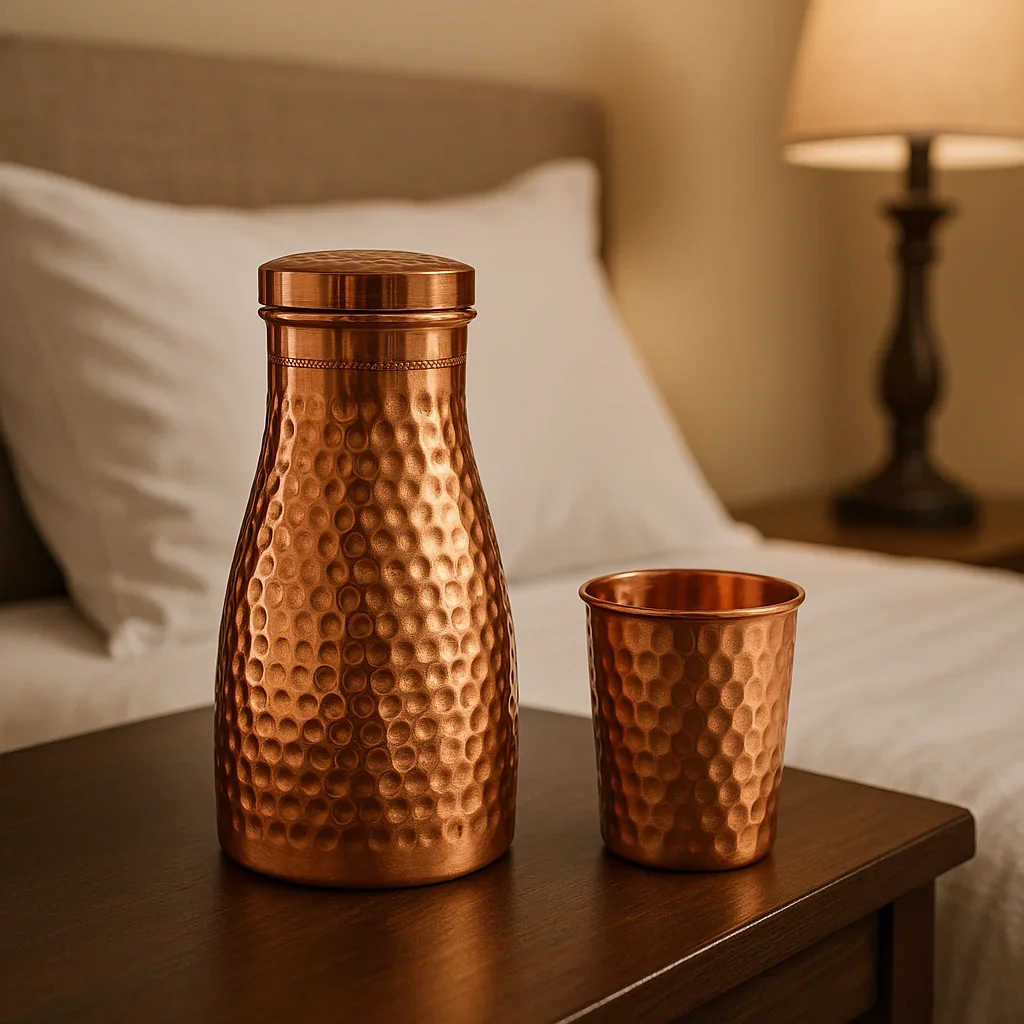
That cabinet. Most people over 50 know exactly what it looks like. Rows of bottles. Fish oil that was supposed to fix the joints. Magnesium that was supposed to fix the sleep. A probiotic that seemed to work for about three weeks. Vitamin D. CoQ10. Turmeric. Ashwagandha. All of it bought in good faith, used consistently, and somehow never quite enough. The cabinet does not lie about the years of effort. The cabinet does not lie about the money spent. What the cabinet does not tell you is why, after all of it, you still wake up feeling the way you do. A research team at Harvard identified something most doctors are not trained to address. The problem is not the supplements. The problem is what most Americans are drinking every single day, what they are washing those supplements down with, what has been accumulating in their cells for decades without their knowledge. The average American over 50 has consumed eleven pounds of microplastics through drinking water alone. Those particles do not leave the body on their own. They embed in tissue, disrupt hormones, drive inflammation, and block the body's ability to absorb the nutrients it is already being given. No supplement addresses this. No supplement can. The only thing documented to actively clear this accumulation is copper. Not another bottle of pills. Not a new protocol. Copper. Water stored overnight in a 99.9% pure copper vessel, consumed first thing in the morning. A practice three thousand years old, confirmed by hospital research, and increasingly understood to be the missing step that makes everything else you are already doing actually start to work. What copper does to your water, and why it is the answer the supplement cabinet was supposed to be, is broken down in full at the link below.
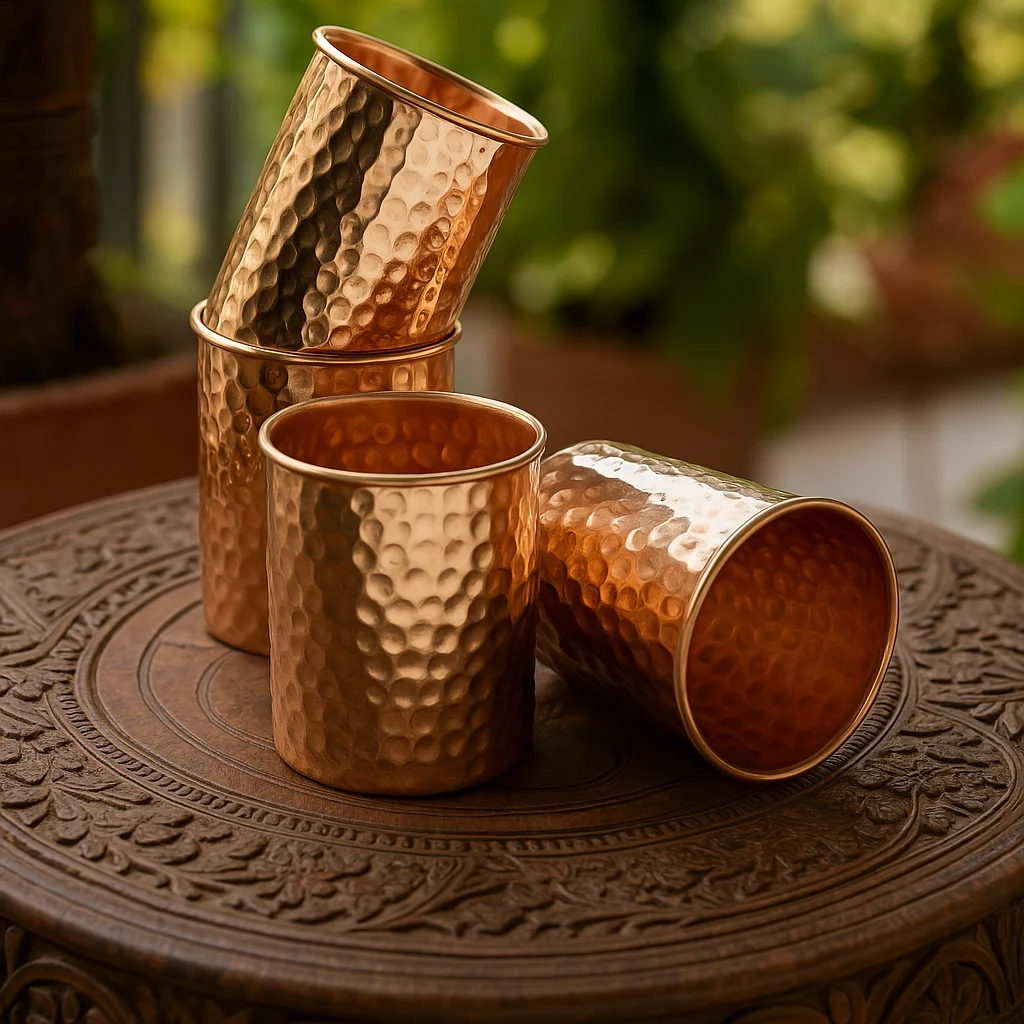
This is the confession nobody who profits from supplements wants to be the first to make. The supplements were not the problem. The money spent on them was not wasted because the products were bad. The problem was what most people were taking them with. Water from a plastic bottle. Tap water run through pipes leaching trace compounds for decades. Water that carried the supplements into a body already processing more accumulated toxins than it could clear. Harvard research recently documented what the supplement industry has not had incentive to advertise. The average American over 50 has eleven pounds of microplastics built up in their body through drinking water alone over a lifetime. BPA. Phthalates. Microplastic particles embedded in organs and tissue. These compounds block hormone function, drive chronic inflammation, and actively interfere with the absorption of nutrients already being consumed. Every supplement enters a system quietly overwhelmed by an accumulation nobody told you to address. Copper-charged water addresses it. Water stored overnight in a 99.9% pure copper vessel absorbs trace copper ions the body uses to bind and flush accumulated toxins through the lymphatic system. The oligodynamic effect, the mechanism by which copper eliminates bacteria and pathogens in stored water, has been documented in peer-reviewed research since 1893. Ayurvedic medicine understood it three thousand years earlier. This is not another supplement. It is the one missing step that makes the supplements you are already taking worth taking. What copper does and why it works is laid out in full at the article below.
Count the supplements you take every morning. Now add up what you spend on them every year. For most Americans over 50, that number sits somewhere between four hundred and a thousand dollars. Fish oil for the joints. Magnesium for the sleep. Probiotics for the gut. Vitamin D. B12. Whatever the last article or doctor visit recommended. And yet most people taking all of it still wake up tired. Still have the joint stiffness. Still hit the two o'clock wall. Still feel, on most mornings, like something is not quite working the way it should. Not dramatically wrong. Just never quite right. The supplement industry built itself on the assumption that the problem is always deficiency. Something missing that can be added back in. Researchers at Harvard are now documenting something the industry has had no incentive to advertise: for millions of Americans over 50, the problem is not deficiency. It is accumulation. The average American over 50 has eleven pounds of microplastics in their body from drinking water alone, built up over a lifetime. Those particles embed in tissue, block hormone function, drive the inflammation behind joint pain, fatigue, and cognitive decline, and interfere with the absorption of whatever nutrients are already being taken. No supplement was designed to address this. Every supplement you take enters a system your water has been quietly overwhelming for decades. Copper-charged water does something no supplement does. Water stored overnight in 99.9% pure copper absorbs copper ions that bind to stored toxins and move them out of the body through the lymphatic system. The antimicrobial properties eliminate pathogens in the water before you ever drink it. Ayurvedic practitioners documented this three thousand years ago. Hospital infection control confirmed it. Harvard research is now making the connection to chronic illness explicit. The full breakdown of what copper does to your water and what that means for your morning is at the link below.
House Of Ayurveda's catalog features 15 products — the strongest sellers are surfaced first on BrandSearch. Each entry exposes the price, product page URL and how the product fits within House Of Ayurveda's overall positioning, letting you reverse-engineer their offer architecture. Useful for spotting bestseller patterns to replicate in your own niche. Source: BrandSearch product tracking, weekly refresh.
House Of Ayurveda receives approximately 87,738 monthly visits, with revenue estimates and growth trends exposed on its BrandSearch profile. The data breaks down traffic mix (organic vs paid vs direct), top markets and growth over the last 3/12 months — the input you need to benchmark realistic targets for your own store. Estimates are directional, not accounting-grade. Source: BrandSearch analytics layer.
Yes — House Of Ayurveda's 92 tracked Meta ads are visible on BrandSearch with full creative, copy, CTA and EU/UK spend where regulated. Each ad links to its current scaling signal (reach rank), so you can distinguish winning creatives from tests. Pair with Spectre to be alerted when House Of Ayurveda launches new campaigns. Source: BrandSearch Discovery, 72M+ Meta ads indexed daily.
House Of Ayurveda's full tech stack is detected and exposed on BrandSearch — apps for email, reviews, upsells, subscriptions, analytics, plus theme and payment processors. Comparing this stack against peers in the same niche reveals which tools are table stakes and which are differentiators in this category. Copy proven combinations rather than testing apps in production. Source: BrandSearch tech-stack detection, monthly refresh.
Map House Of Ayurveda's full funnel via its BrandSearch profile — traffic mix, ad creatives, top SEO terms, growth trends and tech stack. From there, run a gap analysis: what sub-niches do they underserve, what price points are open, what ad angles haven't they tested? Differentiation usually comes from positioning gaps, not from outspending. Source: BrandSearch competitive intelligence.
House Of Ayurveda's business model can be inferred from its product mix, supplier patterns and pricing structure — all visible on its BrandSearch profile. Based in United States, the brand exposes signals on whether it dropships, builds private label inventory or manufactures in-house. The takeaway: model your operations on brands whose sourcing strategy fits your capital and risk tolerance. Source: BrandSearch brand intelligence.
The tools behind the data on this page.