Loading brand data...
The Tea Makers of London offers a wide range of finest quality loose-leaf teas. Our teas are freshly sourced from some of the best tea estates around the world. We carry a large range from Green Tea, Black Tea, White Tea, Oolong Tea, Pu-erh Tea and Fruit Infusions. There's a perfect cup of tea for every tea lover.
Monthly traffic, revenue estimates and visitor behavior — based on public data.
According to BrandSearch data, The Tea Makers of London (the-tea-makers.myshopify.com) is a United Kingdom-based online store specializing in /Food & Drink/Beverages/Coffee & Tea, attracting 101K monthly visitors. The store is generating approximately $894K in monthly revenue according to BrandSearch estimates, with a catalog of 189 products. According to BrandSearch analysis, this brand ranks in the top 25% as a strong performer with above-average traffic in its category. Their technology stack includes Builder.io: Storefront Builder, Checkout Blocks, and Pandectes GDPR Compliance for enhanced store functionality. Geographic distribution shows 47% of traffic from United Kingdom, followed by 16% from United States.
Get precise traffic data
Exact visitor counts, traffic sources, geographic breakdowns & profit margins.
Top 6 products from this store. 189 total in catalog.

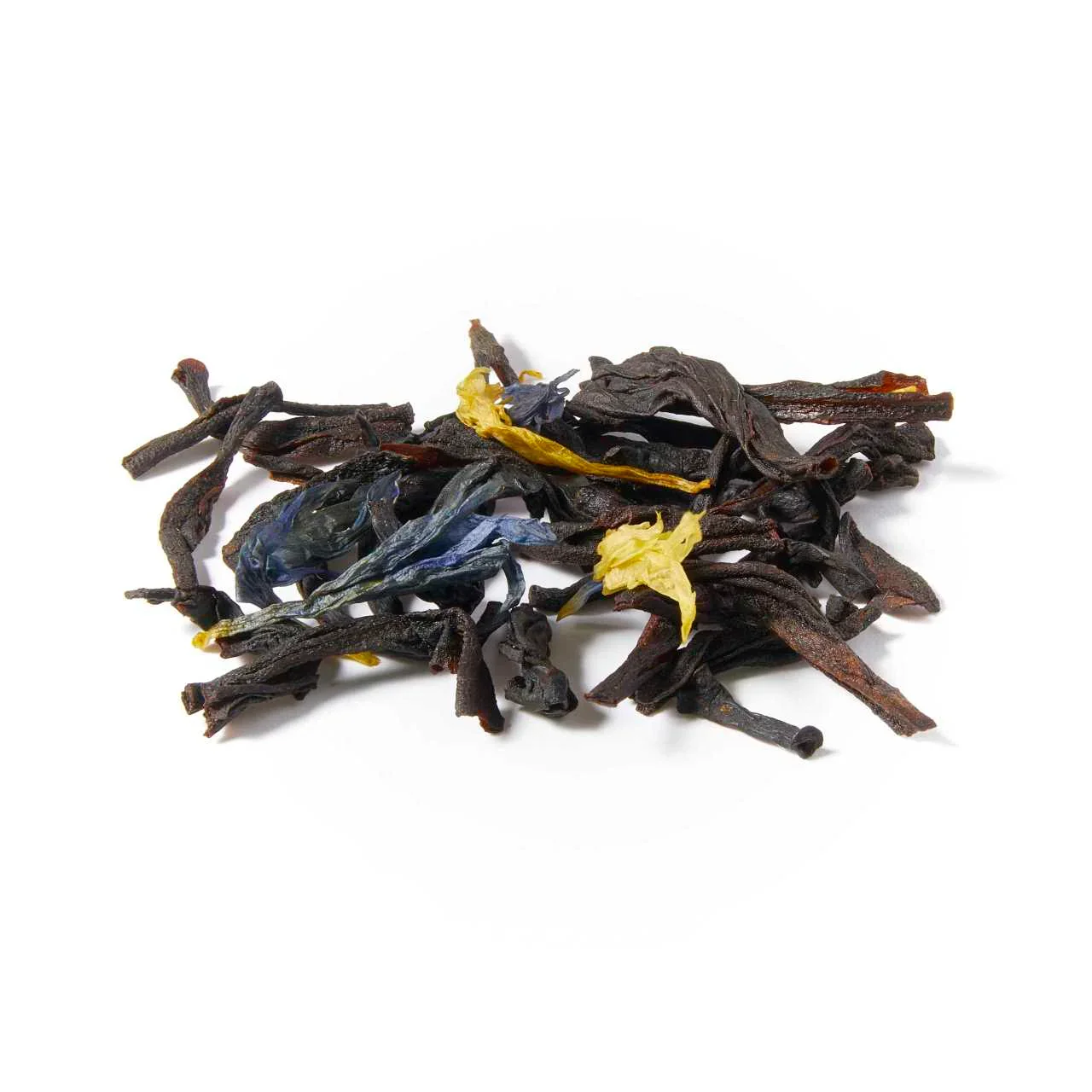
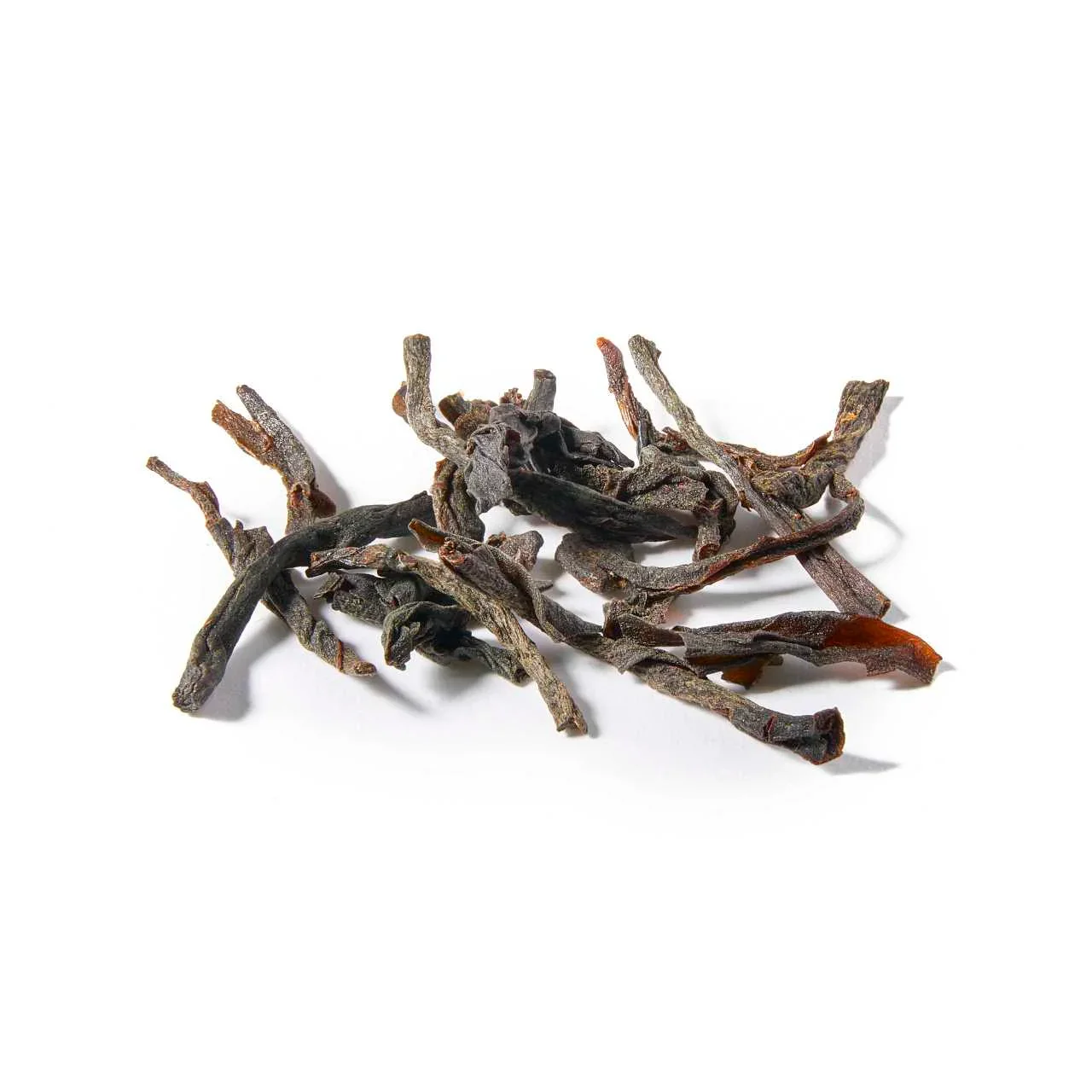
Our Great Taste award-winning Supreme Earl Grey is a loose-leaf blend of the finest Ceylon black teas. Subtly scented with bergamot flavour, it's mixed with vibrant blue cornflowers for an aromatic infusion with distinct citrus fruit notes. Our loose leaf Earl Grey tea is also available in Triune tea bags. Rich and well-rounded in flavour yet beautifully delicate, our Supreme Earl Grey has evenly graded, rolled wiry leaves and deep golden-amber colour. It's bright, citrusy and floral qualities invite you to slow down and take a breath, making it the perfect mid-morning or afternoon brew that can be enjoyed with or without milk. Supreme Earl Grey is harvested all year round from select tea estates in Sri Lanka's revered Nuwara Eliya and Dimbula districts, which are synonymous with the Ceylon tea industry. Here, great care and attention are paid to production techniques, which see the leaves withered, rolled and oxidised in the time-honoured orthodox method. The history of Earl Grey tea From its introduction onto the British market in the mid-19th century, Earl Grey has been linked with afternoon teas and polite society. Much loved for its heady aromatics of citrus-tinged with spice, it hasn't been out of style since – as likely these days to be found in your kitchen caddy as on a hotel tea room menu. Earl Grey was the first scented tea ever brewed. Forever associated with Charles Grey , the second Earl Grey and British prime minister from 1830 to 1834, its exact origins were never recorded but date back to the early 1800s and the start of the global tea industry. One of the most commonly quoted stories about the invention of Earl Grey tea has it that Charles Grey was gifted a black tea infused with bergamot oil by a Chinese mandarin as thanks to one of Grey's men saving his son's life. Another goes that the tea was accidentally 'discovered' when a shipment of bergamot oranges and black tea were shipped together to the earl's home, Howick Hall in Northumberland. More likely is that essential citrus oils were used to improve the flavour of tea made with strong-tasting water. Because Charles Grey never trademarked the name, the emerging big tea companies of the Victorian era were left to claim Earl Grey tea as their own, and the truth will probably remain a mystery. What is without a doubt is how popular Earl Grey tea has become the world over. Today, Earl Grey is usually made by tea companies from Ceylon or Assam teas, or a blend of both, combined with bergamot orange. However, various regions and companies have created their own versions of the blend down the years – the most famous spin-off being Lady Grey, or Mary Grey in our case. Science has recently given Earl Grey tea even more of a boost. To add to a raft of discoveries about black teas' antioxidant and disease-fighting properties, studies have shown that bergamot may aid digestion, inhibit gut inflammation and help fight the bacteria associated with stomach ulcers and other gastrointestinal disorders. Alternatives to this iconic black tea blend For a more delicate take on this much-loved blend, try our Mary Grey , full of fruity, citrus flavour and cheerful marigold petals. For another flavoured black tea, why not try our Assam Chocolate Spice Chai ? A healthy and vegan alternative to hot chocolate.

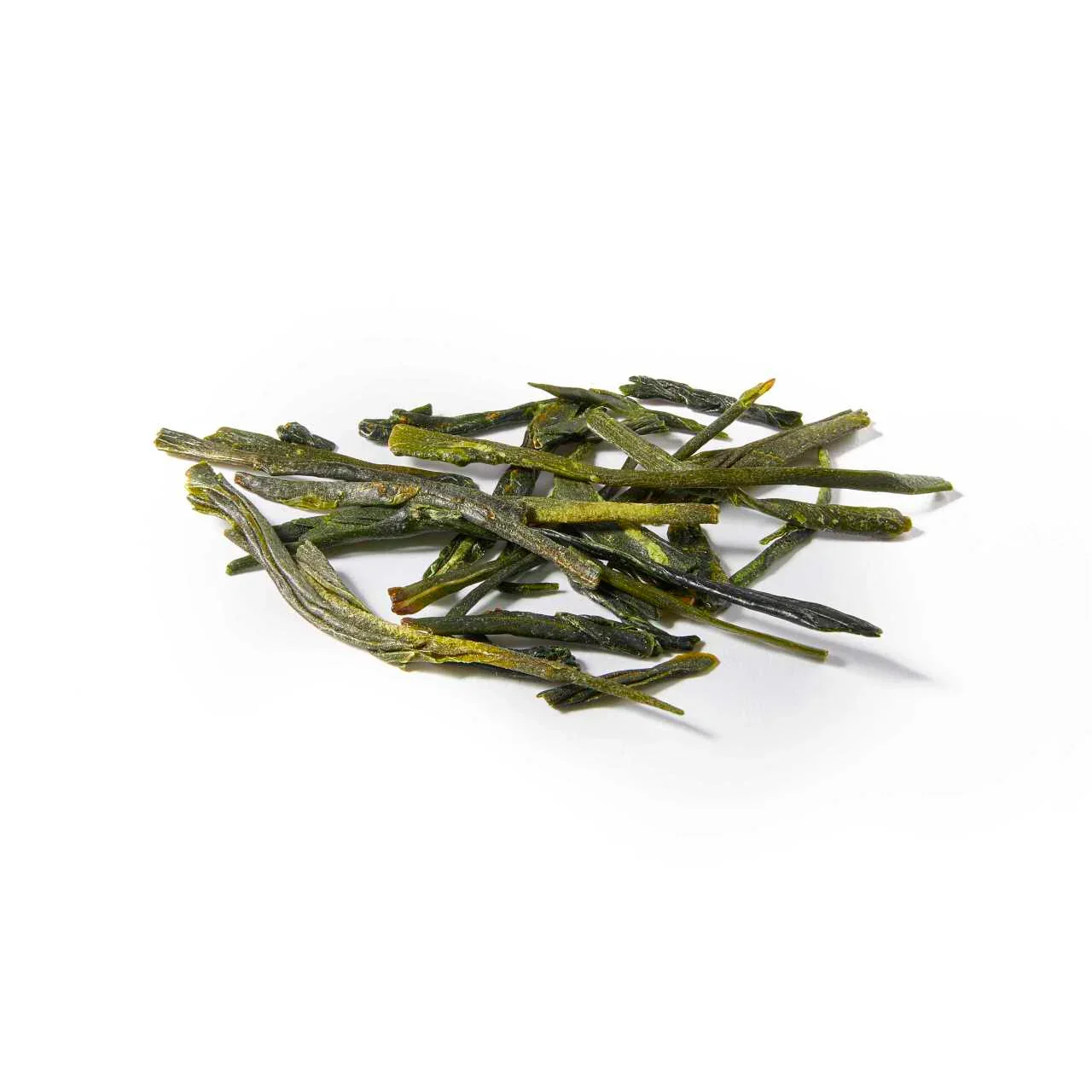
Harvested in the historic tea-growing district of Ise Bay, Japan, our No. 51 loose leaf Sencha is an Great Taste award-winning luxury green tea picked from the treasured spring flush on a farm cultivated by Yosh Tsutsumi. With a fresh grass and seaweed aroma, and sweet flavour with subtle umami astringency, it's a high-quality refreshing brew that can be enjoyed hot or cold at any time of day. Deep green, broken needle-like tea leaves create a clear, light-green infusion with sunny yellow undertones. In the mouth are more of those grassy characters, along with a creamy quality that makes for supremely smooth sipping. First-flush Sencha like this Great Taste Awards winner are considered the finest of their kind, and we work closely with producer to source the best from each harvest. Our Japanese Sencha green tea is grown from the hybrid Saemidori (it means 'clear green') cultivar at around sea level in the Ise Bay area of Mie Prefecture on Honshu, where tea has been grown for some 800 years. What is sencha tea? Much loved for its light vegetal character and fresh, grassy quality Sencha is one of the most popular teas in Japan and certainly one of its most successful exports. A Buddhist monk called Eisai is widely credited with introducing tea farming to Japan, bringing seeds back from a visit to China in 1191. His book, Kissa Yojoki (which can be translated as 'How to Stay Healthy by Drinking Tea'), was the first book about tea in Japan. Tea, the monks believed, was beneficial to both health and meditation. Their uptake was followed by the tea ceremonies associated with Samurai and Japanese intellectual culture – created to appreciate the arts, philosophy, education and politics while enjoying the brain-sharpening benefits of this hot 'new' caffeinated beverage. By the 16th century, tea bushes were being shade-grown to boost chlorophyll and mellow out the leaves' flavour. A method still used today in the production of matcha. But it was during Sakoku, Japan's period of self-imposed isolation from 1633 to 1853, that local tea growers really started experimenting with unique production techniques. In 1738, a tea farmer called Nagatani Soen made the first batch of recognisably modern sencha by quickly steaming the leaves to halt oxidation. He then immediately dried and rolled them, thereby locking in their garden freshness and rich green hue. Much the same technique is still used in the production of sencha, representing about 80 per cent of the Japanese tea industry. Our Japanese Sencha tea is steamed, gently machine-rolled and shaped during the teas production into the customary thin, cylindrical form of tea leaf, which has a very fine and fragile structure. Finally, the leaves go through hot-air drying to reduce the moisture content, aiding preservation and capturing the tea's distinctive flavour. The health benefits of sencha green tea Like other speciality green tea s, sencha is made from young, unoxidised leaves through a low-intervention production process that helps preserve the mother plant's nutrients and antioxidants. Studies have shown that the health benefits of green tea may include weight loss, lowered blood pressure and cholesterol, better resistance to the ageing effects of free radicals – even improved dental health, thanks to its fluoride content. But the best reason to drink our Sencha – whether served comfortingly warm or refreshingly chilled – is its beautifully clean, green flavour. If you loved this Japanese loose leaf tea… If you like this tea, you'll love our luxurious Gyokuro green tea or our next-level Supreme Sencha , also from the Ise Bay area of Mie, Japan. Double the health benefits of Japanese sencha by combining it with matcha in a caddy of clean-tasting Sencha Iri Matcha or enjoying our antioxidant-rich Sencha Goji Berry blend. Alternatively, try Supreme Genmaicha , which combines the fresh taste of green tea with the toasty notes of roasted rice, or Genmaicha Iri Matcha , which adds matcha into the mix for a delicious three-dimensional flavour. Read our blog to learn all about the Health Benefits of Japanese Green Teas .

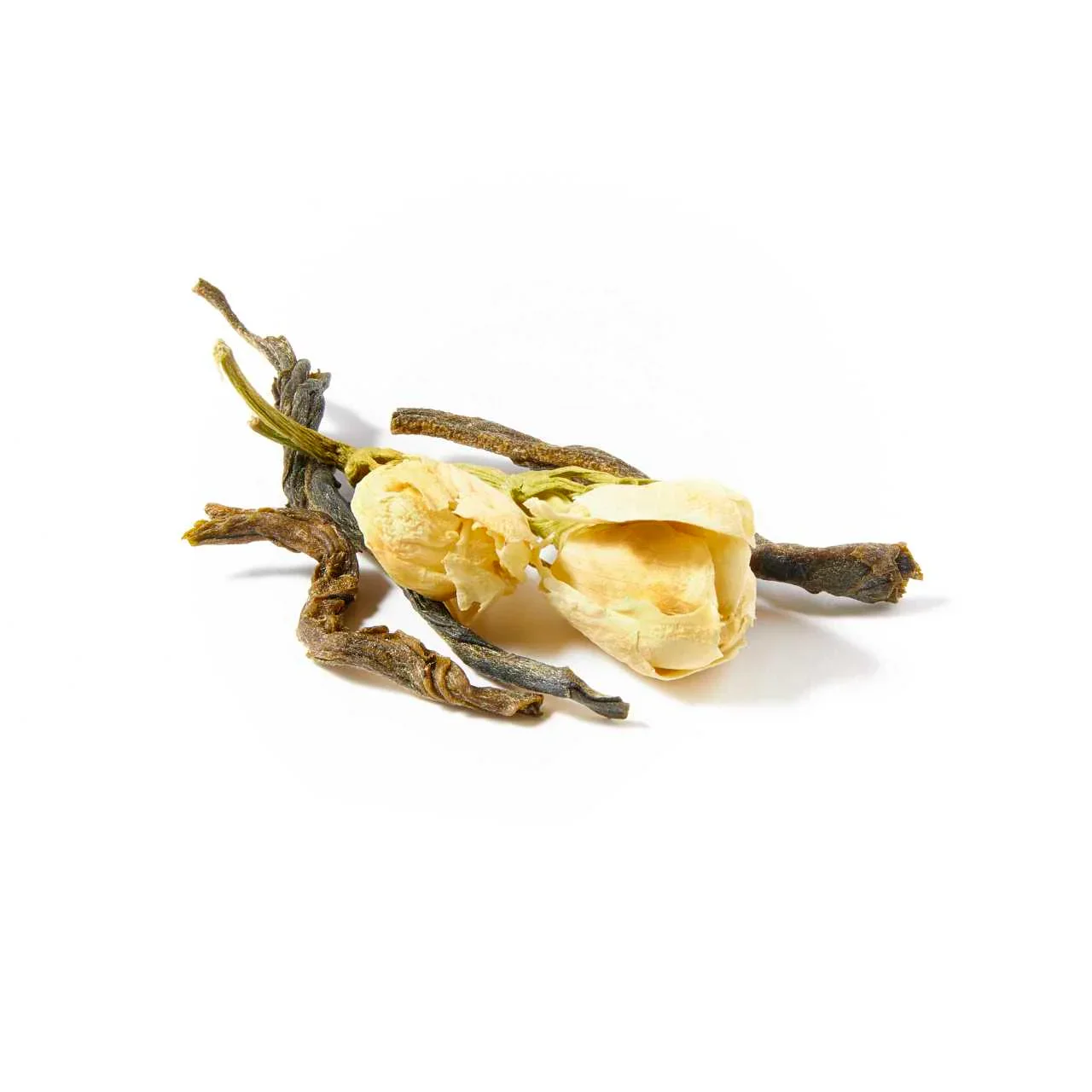
Fragrant and summery, our Great Taste award-winning No. 53 Jasmine Green Tea is a naturally infused Chinese loose leaf tea perfect for partnering with food or giving your afternoon a lift. Harvested in Fuzhou, south-east China, this high-quality tea combines long curly leaves of Camellia sinensis mixed with heady jasmine blossom for a delightfully floral brew. As well as imparting a typically alluring aroma, the jasmine adds a subtle sweetness that beautifully balances this premium tea's grassy, nutty notes. You can enjoy this delicate, light golden infusion as it is or with a squeeze of honey if you'd like to add a dash of sweetness. If you're looking to pair it with food, think of cereals and pastries for breakfast or cold roasted meats and sandwiches in the afternoon. What are the health benefits of Jasmine tea? As well as providing a delicate pick-me-up, jasmine tea has a range of potential health benefits, thanks to its flavonoids called catechins , which studies have shown may be linked to good cardiovascular function, weight management and even cancer prevention. In addition, because of their minimal processing, green teas are also higher in other antioxidants such as carotenoids and ascorbic acid (vitamin C) than other teas. How is this loose leaf tea made? Jasmine tea is a Chinese speciality that is enjoyed all over the world. Typically, Jasmine tea is green-or white tea-based, naturally infused with jasmine buds and Jasmine flower petals. At The Tea Makers of London, we work closely with some of the best Tea Farmers and producers globally, regularly visiting local tea producers, their plantations and production facilities to ensure that the teas we provide are of the utmost quality. Each premium tea in our Jasmine Tea range is sourced from Fuzhou, the capital of Fujian province in China's southeast. With its subtropical climate, short dry winters and high rainfall, the area has historically proved ideal for growing jasmine plants and the tea bush, Camellia sinensis. Jasmine was originally planted in the third century and has been blended with green tea leaves since the Song dynasty era (960-1279 AD). In spring, the finest tea leaves are carefully plucked and dried to prevent oxidation, then stored away until summer's Jasmine flower harvest, when they are carefully layered with the new blooms. Left for several hours, the essential oils of the Jasmine slowly seep into the tea leaves, mixing the natural flavours and aromas of both before the tea is gently heated to remove any residual moisture. This process is repeated up to seven times to ensure that the tea leaves take on a strong fragrance. This infusion method – referred to by tea professionals as 'scenting' – is an intricate process that requires many years of experience to perfect. Explore similar Chinese or Ceylon green teas For a more fully floral example of a Chinese jasmine cup of tea, try our intensely fragrant Jasmine Dragon Pearls , which unfurl prettily before your eyes as they brew. If you're looking for another low-processed tea with the heady aroma of jasmine, try something from our range of specialty white teas: Jasmine Silver Needle from China. Jasmine tea is as beautiful to look at as it is to drink with its long leaves and delicate blooms. Enjoy watching it brew in a stylish teapot or infuser from our stunning range of Glassware . You can read more about this ancient Chinese style of tea in our Tea Journal

Sourced from the high-altitude tea gardens of Sri Lanka, our premium English Breakfast Ceylon Black Tea is a classic loose-leaf blend boasting a smooth flavour, tantalising amber colour and rich, astringent mouthfeel. With dark, wiry leaves and toasted caramel notes, it has all the brisk, full-bodied characters that have made English breakfast tea a classic breakfast brew. The leaves for our Great Taste award-winning Ceylon breakfast tea are harvested all year round in Sri Lanka's celebrated Dimbula and Nuwara Eliya tea regions, located at 1,448m and 1,868m above sea level, respectively. This is where artisan producers have farmed the plantations for more than 150 years, taking advantage of the mountainous terrain and monsoon-affected climate. Here, cool blustery blasts blow through the valleys, rainfall is high and frosts can be seen in winter, which places a measure of stress on the tea plants. English breakfast tea is typically made from a blend of robust black teas that hail from either Sri Lanka or Assam, in India's north-east. To create an unrivalled taste experience for ours, we carefully select the finest Ceylon BOP (Broken Orange Pekoe) and larger FBOP (Flowery Broken Orange Pekoe) grades of loose-leaf teas . We choose 100% pure orthodox Ceylon teas for their strength and well-rounded character, which makes them the perfect ingredients for this blend. How Orthodox English Breakfast tea is made Tea making begins with picking carefully selected succulent leaves and buds from the Camellia Sinensis plant. Once plucked, the leaves go through the time-honoured orthodox production process: withering, to dry them out, then rolling, which transforms them into the familiar thin, wiry shape. This is followed by oxidation, sometimes referred to in the tea industry as 'fermentation', when the broken, rolled leaves are laid out and exposed to the air for a set period of time, usually several hours. Here's where the magic happens, as the leaves darken and the chemical processes kick in, contributing to the tea's distinctive aroma, colour, strength and briskness – in essence, its character. Next, the tea is dried again, this time in a chamber with hot, conditioned air – a process that further desiccates the leaves, intensifies their colour and helps maintain quality for storage. Finally, they are sorted by hand, ready for shipment and delivery. In the humid Sri Lankan hills, the process of oxidation takes up to four hours, during which the leaves turn copper brown and the tea's unique fragrance starts to unfurl. This process also ensures that the steeping liquid is strong and flavourful. Our English Breakfast tea has a grade of BOP/FBOP. Facts about this iconic tea English breakfast tea's rich characters, invigorating flavour and high caffeine content are what have made it so historically popular. It was the first blend to become a commercial success, most notably in its namesake UK, where it has long been famous as the nation's favourite 'eye-opener'. It is often enjoyed hot or as an iced tea, or as the perfect companion to a Full English Breakfast. In recent years, studies have also pointed to English breakfast tea's health benefits. Whether taken strong and black in the morning or with milk and sugar throughout the day, a cup of black tea is now known to pack in minerals such as magnesium and potassium while also being rich in antioxidants and vitamin B. It also may have an impact on blood pressure. As for its popularity in times past, it was Catherine of Braganza, Portuguese wife of the English King Charles II, who started the habit of drinking tea in the morning. As a new arrival at the English royal court, Catherine was known to prefer tea to ale – at the time the customary breakfast drink of choice – and a new upper-class trend was set. But as the 17th century rolled into the 18th and 19th, tea transitioned from an upper-class luxury to a beverage enjoyed by British citizens of all stripes. By the time Scottish tea master Robert Drysdale introduced what would eventually become known as the English breakfast blend to Queen Victoria in the 1890s, almost everyone had a caddy in their kitchen. Alternatives For those who love the bold flavour of an English breakfast blend, our Assam Breakfast Tea packs a similar flavour punch, with a rich infusion and a lift from fruity notes. Other alternatives for a strong cup of tea include Irish Breakfast and Ceylon Breakfast . If you're after something brighter, with citrusy notes and floral undertones, try our best-selling Supreme Earl Grey . Looking for more black teas? Why not sample a wider taste with our Classic Black Tea Discovery Collection .


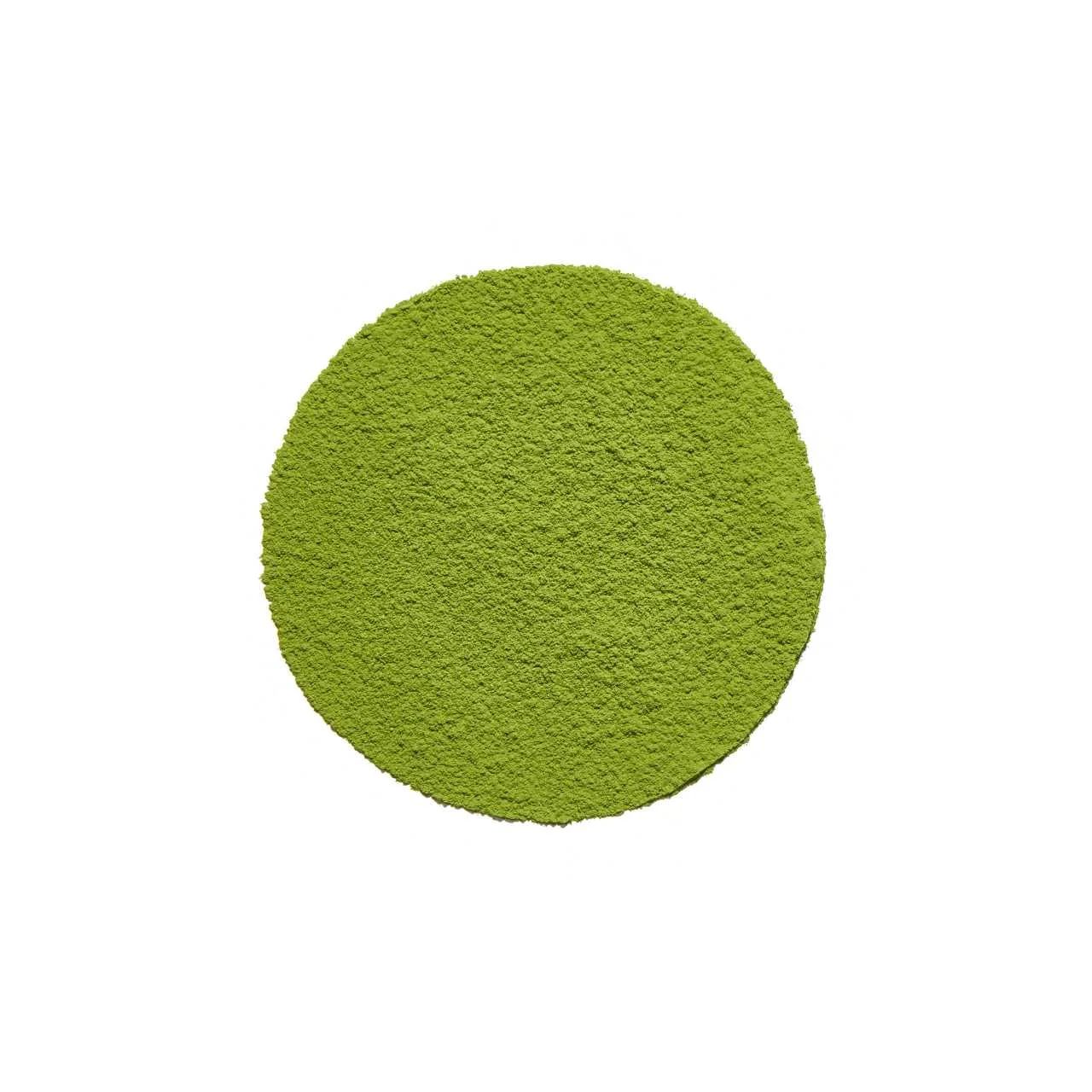
Let’s not stand on ceremony here: this Great Taste award-winning matcha is one of our finest luxury green teas. Harvested in the historic tea-growing district of Ise Bay, Japan, our vibrant green Ceremonial Matcha is an exceptionally high-grade tea with intense sweetness and offers a much deeper, less bitter flavour than standard-quality matcha powders. Made from only the highest quality shade-grown Camellia Sinensis tea leaves that are steamed and stone-ground in the traditional way, this brilliant green tea captures all the goodness of the early spring flush. It has a mild aroma of fresh grass with a hint of fruitiness and a rich, creamy flavour underscored by a subtle vegetal sweetness. Little wonder it was a two-star winner at the Great Taste Awards. Every aspect of our Ceremonial Grade Matcha’s production is meticulously overseen by the specialist Japanese farmers we source our tea from. Ise Bay is located on the Pacific Coast of Mie Prefecture in Honshu, where the heritage of matcha goes back 800 years. Here, the knowledge of tea growing is passed down through the generations. For these growers, matcha is more than a commodity; it’s a precious part of Japanese culture, enjoyed throughout history by everyone from Samurai warriors searching for an energy boost to Buddhist monks as an aid to meditation. The health benefits of matcha Those Buddhist monks knew that among the benefits of matcha is how it offers a slow release of caffeine, thus avoiding the spike-then-slump of coffee and some teas. But the health benefits of drinking matcha go way beyond sustained mental clarity. Key among them are the plant-derived antioxidants called catechins, of which one – epigallocatechin gallate (EGCG) – is found in particularly high quantities in matcha. Studies have found that, among other things, EGCG can help neutralise free radicals, fight cancer and reduce ‘bad’ LDL cholesterol. In addition, matcha has a high concentration of L-theanine, an amino acid that can ease anxiety, helping with relaxation and sleep. How to brew Matcha Tea First, let’s talk about the ways you can enjoy matcha tea. Matcha can be prepared for different liquid consistencies; either Koicha (thick matcha) or Usucha (thin matcha). Add the matcha powder to your cup/bowl, and then add 80C water. For thick tea ( Koicha ), use 3.75g of matcha powder with 40ml water. For thin tea ( Usucha ) , use approximately 1.75g of matcha powder with 75ml water. Whisk the mixture using a Bamboo Whisk, known in Japanese as a Chasen , until the liquid has a uniform consistency. Finally, when enough foam has formed on the surface, beat at a medium speed to produce finer bubbles. Serve and enjoy all that green goodness. What else can you make with Matcha? Beyond your daily brew, however, this verdant powder offers plenty of culinary uses. Matcha’s grassiness lends dishes a unique savoury flavour with bittersweet undertones, while its dazzling colour can be used to great effect as a natural food colouring. Being particularly smooth and sweet, our Ceremonial Grade Matcha powder is perfect for making delicious desserts and for adding to spicy coconut curries. Use it in baking or add to icing. And for an easy win that ups your nutrient intake, sprinkle it over eggs, add a teaspoon to a smoothie, or mix it with natural yoghurt and fruit for a healthy breakfast bowl. Meet our range of Japanese Matcha For the ultimate clean, green taste of this Japanese speciality tea, you can also enjoy our silky-smooth Organic Ceremonial Grade Matcha . You can experience two of Japan’s most famous tea exports in a caddy of clean-tasting Sencha Iri Matcha or, for the vegetal characters of matcha combined with the warm notes of toasted rice, our Genmaicha Iri Matcha is comforting and delicious. You can also transport yourself into the calm serenity of the traditional Japanese tea ceremony with our Ceremonial Matcha candle . Want to make matcha green tea properly? It would help if you had a couple of tools, including a bowl and the traditional bamboo whisk called a chasen. Kit yourself up with all the Matcha Essentials from our range of Teaware, and read more about the traditional tea ceremony, for which our Ceremonial Grade Matcha is named, in our Tea Journal .
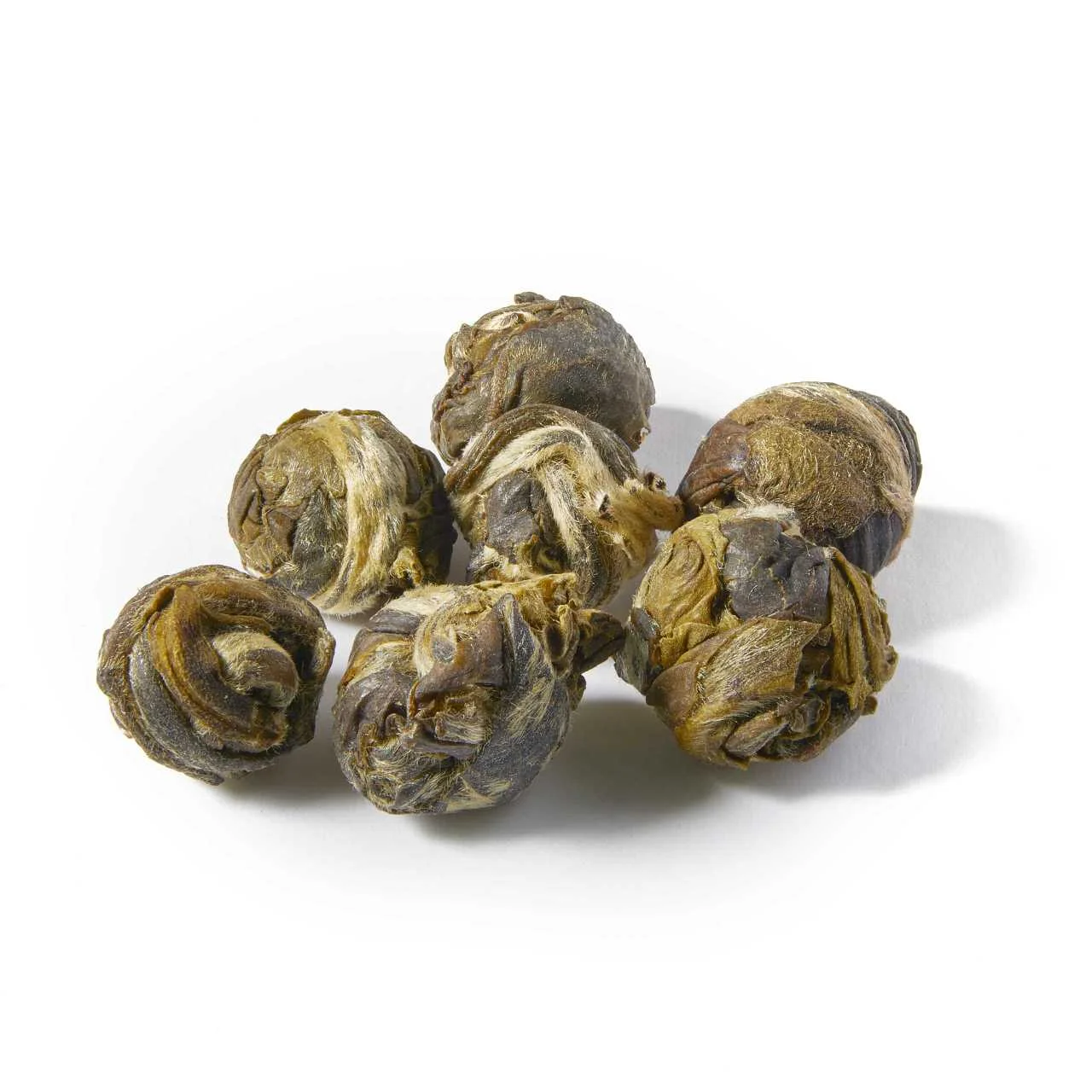
Fresh and delicate, this luxury Chinese loose leaf tea is a gem. Made of tiny hand-rolled fresh Jasmine Pearls that unfurl as it brews, it has an elegant Champagne colour that looks stunning served in elegant glassware. But the most notable thing about our No. 55 Jasmine Dragon Pearls is its flavour: sweet, intensely floral jasmine scented with hints of spring-like greenery – a testament to the time of year this single-origin tea is harvested. A two-star winner at the Great Taste Awards, this beautifully fragrant brew hails from Fuzhou in the south-eastern province of Fujian, the historic home of Jasmine tea. Each pearl is created by taking the carefully plucked long, silver, velvety shoots of the Camellia sinensis tea bush – harvested in spring and carefully hand-rolled into little tea balls naturally scented with fresh, aromatic Jasmine flowers. Being worked by hand from harvest to final product helps ensure the smooth flavour and rounded mouthfeel of this speciality tea, which is perfect as a post-meal digestive aid or a refreshing afternoon infusion. What are the health benefits of Jasmine tea? Jasmine Dragon Pearls contains the health benefits associated with all premium green teas. Studies have shown that these may include everything from higher fat-burning triggers to cancer-fighting properties – a result of their being packed with antioxidant-rich plant compounds called polyphenols, which are better preserved in green and white teas thanks to their less intensive processing methods. What is Jasmine Dragon Pearls tea? Known in China as 'mo li hua zhu', or Jasmine flower tea, Jasmine Dragon Pearls is an artisanal Chinese tea made from premium green tea leaves and jasmine flowers. During production, the tea leaves are layered with jasmine buds, which allows the essential jasmine oils to seep into the tea. The tea leaves are then delicately rolled into beautiful little pearls that unfurl when steeped in hot water. At The Tea Makers of London, we work closely with some of the best tea farmers and producers globally, regularly visiting local tea fields and production facilities to ensure that the teas we provide are of the utmost quality. Each premium tea in our Jasmine Tea range is sourced from Fuzhou, the capital of Fujian province in China's southeast. With its subtropical climate, short dry winters and high rainfall, the area has historically proved ideal for growing jasmine and the tea bush, Camellia sinensis. Jasmine was originally planted in the third century and has been blended with green tea leaves since the Song dynasty era (960-1279 AD). Variations on this perfumed green loose leaf tea If you love this delightful floral brew, try our Jasmine Green Tea – another refreshing afternoon pick-me-up and an excellent accompaniment to food. If you're looking for another low-processed tea with the heady aromas of jasmine, try something from our range of speciality white teas: Jasmine Silver Needle from China. With its long leaves and delicate blooms, Jasmine Tea is as beautiful to look at as it is to drink. Enjoy watching it brew in a stylish teapot or infuser from our stunning range of Glassware. You can read more about this ancient Chinese style of tea in our Tea Journal.
183 more products
Revenue per product, sales velocity & trending status
Organic vs paid traffic, top SEO keywords and geographic audience distribution.
Last 12 months
5 ad creatives running on Meta platforms. Analyze messaging, targeting strategy, and creative angles.

Looking for real matcha? We source directly from Japan’s most respected growers to bring you vibrant, smooth matcha that energises without the crash. Trusted by chefs, loved by tea lovers.

Café quality. No queue. Japanese matcha, traditionally stone-milled to preserve colour and character. Whisk, pour, taste the difference.

Café quality. No queue. Japanese matcha, traditionally stone-milled to preserve colour and character. Whisk, pour, taste the difference.

The noise doesn’t stop. But you can. One cup, sourced with intent. One pause, shaped by place.

Before you open another tab… Pause. Put the kettle on. Brew something better. Your daily ritual deserves tea with purpose.
88 more ad creatives
Ad spend, audience targeting & creative performance
Complete breakdown of Shopify apps, marketing tools, analytics platforms, and conversion optimization technologies powering this e-commerce store's operations.
Showing 5 technologies • 3 more available

Security, reliability and speed everywhere, powered by an intelligent global network.

Arrive gives you accurate and timely updates on everything you order, across all online retailers.

Make contactless, secure purchases in stores, in apps, and on the web.
Showing 5 applications • 3 more available
Grow faster and more efficiently with email, sms, reviews and more. Powered by your customer data.
Highlight what customers love about your products by adding ratings and reviews to your online store
Convert more sales with flexible and customized On-site Messaging about Klarna as a payment method.
Collect and display user-generated content (UGC) such as Ratings & Reviews to showcase social proof.
Get winning data you can't find anywhere else, save 95% of your time, and replace $1500+/m in tools. The platform built to make you rich fast for sure.
"The ability to see exactly what creatives are scaling for our competitors is a cheat code. We've improved our hit rate on new ad launches by over 300%."


Showing 6 of 6 similar stores with overlapping products, audience, and strategies.


See all competitors, ad creatives, and marketing strategies for The Tea Makers of London.
Start free


Everything you need to know about www.theteamakers.co.uk
According to BrandSearch data, www.theteamakers.co.uk's product catalog includes multiple bestselling products. Analyze their winning products, trending items, pricing strategies, product descriptions, and top sellers. See which products drive the most revenue and learn from their product selection strategy to find your own winning products for dropshipping or private label.
According to BrandSearch analytics, www.theteamakers.co.uk receives approximately 101,024 monthly visitors. BrandSearch provides detailed traffic analytics including organic vs paid traffic sources, geographic distribution, bounce rates, session duration, and estimated monthly revenue ranges. Use these performance metrics to benchmark your own e-commerce store and set realistic growth targets.
Yes! BrandSearch's ad intelligence reveals www.theteamakers.co.uk's complete Meta advertising strategy including all Facebook ads, Instagram ads, and ad creatives. Analyze their ad copy, visual hooks, call-to-actions, targeting strategies, and promotional offers. Study their winning ad creatives to inspire your own Facebook and Instagram advertising campaigns and improve your ROAS (Return on Ad Spend).
BrandSearch's technology detection identifies www.theteamakers.co.uk's complete tech stack including all Shopify apps, theme, payment processors, email marketing tools, analytics platforms, and conversion optimization apps. See which apps they use for reviews, upsells, abandoned cart recovery, SEO, and social proof. Copy their winning tech stack to build a high-converting e-commerce store without trial and error.
BrandSearch provides full competitive intelligence on www.theteamakers.co.uk: traffic sources (organic SEO, paid ads, social media, email), top SEO keywords driving traffic, geographic markets, customer demographics, advertising spend estimates, and growth trends. Identify gaps in their product range, find underserved niches, analyze their pricing strategy, and discover opportunities to differentiate your brand. Perfect for competitive analysis and market research.
BrandSearch helps you identify www.theteamakers.co.uk's business model by analyzing their product catalog, supplier patterns, shipping locations, pricing margins, and product uniqueness. See if they're running a dropshipping operation, selling private label products, or manufacturing their own goods. Learn from their product sourcing and fulfillment strategies to optimize your own e-commerce operations.


See every product, winning ad, traffic source and revenue signal behind The Tea Makers of London — in seconds.
Explore other stores similar to The Tea Makers of London