Monthly traffic, revenue estimates and visitor behavior — based on public data.
About My Store
Last updated: March 7, 2026
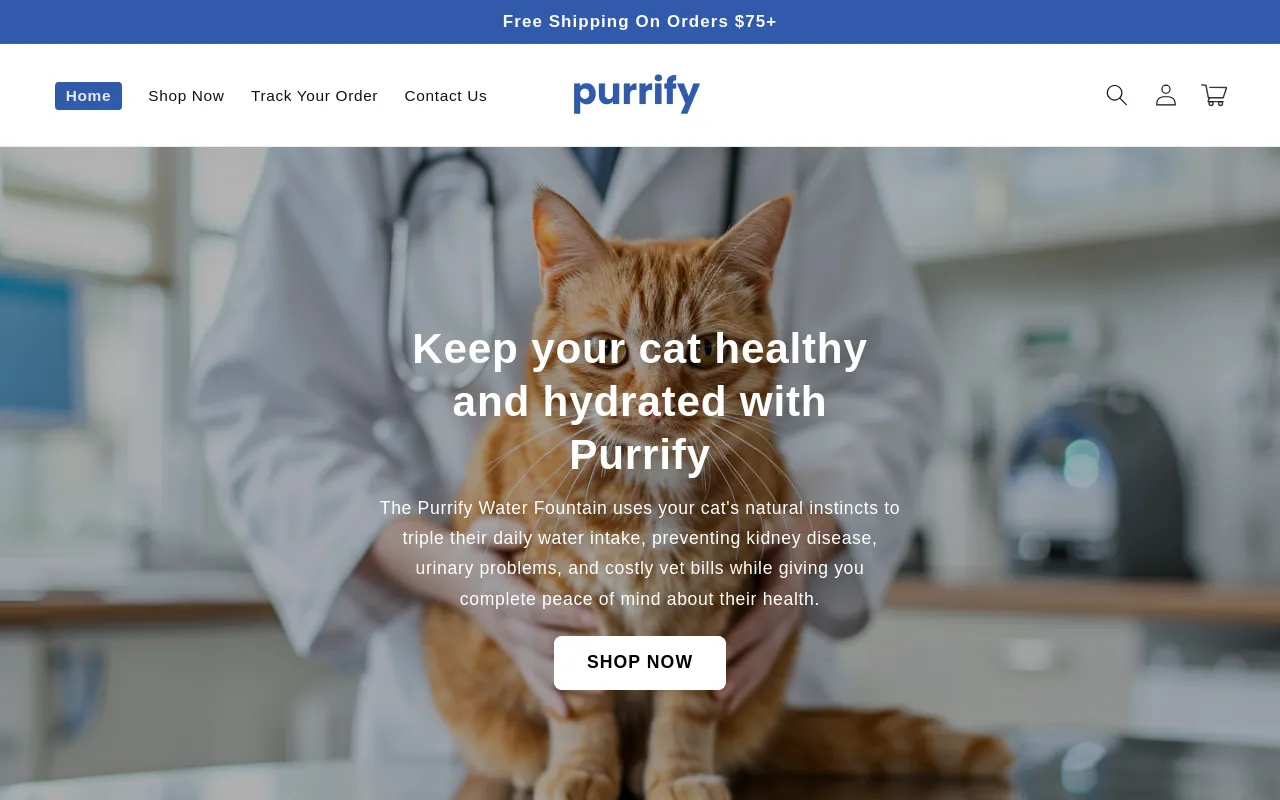
My Store (dxnxn1-bd.myshopify.com) is a United States-based online store specializing in /Pets & Animals/Pet Food & Supplies. The store is generating approximately $286K in monthly revenue, attracting 32K monthly visitors, with a catalog of 7 products. This brand ranks as a growing store with steady visitor engagement in its category. Their technology stack includes BUCKS Currency Converter PRO++, Kaching Bundle Quantity Breaks, and DSers‑AliExpress Dropshipping for enhanced store functionality. Geographic distribution shows 19% of traffic from United States, followed by 11% from Italy.
Organic vs paid traffic, top SEO keywords and geographic audience distribution.
Monthly Traffic
Last 12 months
32Kvisits/mo
1M-3.2%
3M+16.1%
6M-19.5%
MarAprMayJunJulAugSepOctNovDecJan
Engagement
Pages / Visit1.7
Avg. Session12s
Bounce Rate37.3%
Traffic Sources
Direct49.9%
Search29.0%
Social11.9%
Referrals7.4%
Paid1.2%
Email0.1%
Top Markets
United States19.3%
Italy11.1%
Australia9.3%
Germany7.5%
United Kingdom6.2%
Top SEO Keywords
Organic search terms
#118K vol.
purrify
CPC $1.10$8K
#24K vol.
trypurrify
CPC $0.00$3K
#33K vol.
purrify cat fountain
CPC $1.18$960
#4840 vol.
try purrify
CPC $0.00$600
#5420 vol.
trypurify.com
CPC $0.00$530
Meta Ads Library
Facebook & Instagram Ad Creatives
5 ad creatives running on Meta platforms. Analyze messaging, targeting strategy, and creative angles.
View details
FACEBOOK
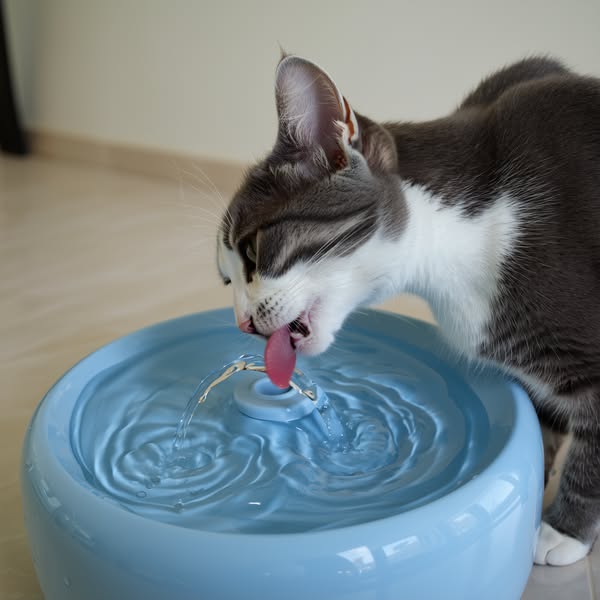
Read If You Own A Cat Water Fountain 👆
The moment my vet saw my cat's NEW fountain, she said THAT'S why his kidneys were FAILING.
I live in Portland with Max, my 10-year-old tabby, and I'd spent the last two years trying to solve his hydration problem.
It started innocently enough. During a routine checkup, my previous vet mentioned Max seemed slightly dehydrated. "Maybe try a water fountain," she suggested. "Cats prefer moving water."
Simple enough. I went to PetSmart that afternoon and bought a cute flower-shaped fountain. Plastic, but BPA-free. Had great reviews. Max would love it.
Except he didn't.
He'd approach, sniff, and walk away. Sometimes he'd take a desperate lap or two, but mostly he avoided it entirely.
"He's just getting used to it," I told myself. Months passed. Max drank less and less.
So I upgraded. Spent $60 on a fountain with LED lights and three water flow settings. Surely the variety would entice him.
Same result. Approach. Sniff. Retreat.
By the third fountain—an $85 model with "antimicrobial plastic" and a four-stage filter—I was desperate. This one had hundreds of five-star reviews. Pet bloggers raved about it. It HAD to work.
For a week, it seemed like it might. Max drank a bit more. Not much, but enough to give me hope.
Then came the diagnosis that shattered everything.
"Early stage kidney disease," Dr. Patel said gently, reviewing Max's bloodwork. "His values are concerning for a 10-year-old."
"But he has a fountain," I said, my voice breaking. "I've tried three different ones. He just won't drink enough."
"Show me which fountain he has now," she said.
I pulled up the product page on my phone, eager to show her the premium model I'd researched so carefully. The antimicrobial technology. The advanced filtration. The flowing water design.
Her expression darkened immediately. "Is that plastic?"
"BPA-free antimicrobial plastic," I corrected. "It's specifically designed to prevent bacteria."
Dr. Patel turned her computer screen toward me. "This is what 'antimicrobial' plastic looks like after one week of use."
The image made my stomach turn. A fountain identical to mine, but the inside was coated in pink and black slime. Biofilm covered every surface like a horror movie.
"But mine doesn't look like that," I protested weakly.
"Not to your eyes. But let me show you something." She pulled out a UV flashlight from her drawer. "Bring in your fountain tomorrow. We'll look at it under ultraviolet."
That night, I cleaned Max's fountain thoroughly, wanting to prove her wrong. Scrubbed every part. Fresh filters. Pristine.
The next day's revelation destroyed me.
Under the UV light, my "clean" fountain glowed like a crime scene. Bacteria colonies invisible to the naked eye covered every plastic surface. The crevices harbored growth that no amount of cleaning could reach.
"Plastic is porous," Dr. Patel explained. "Even BPA-free, even antimicrobial. Bacteria colonizes the microscopic scratches within hours. You can't see it, smell it, or clean it away. But Max can detect it at a molecular level."
"So every time he approaches the fountain..."
"His instincts scream 'poison.' He's genetically programmed to avoid contaminated water. In the wild, this kept cats alive. In your home, it's killing him through dehydration."
She showed me more photos. Cats with severe chin acne from plastic fountains. Kidney failure timelines correlating with fountain purchases. Statistics that made me feel like the worst cat parent alive.
"I was trying to help him," I said, tears flowing. "I bought the best fountains I could find."
"Marketing doesn't equal science," she said gently. "Let me show you what actually works."
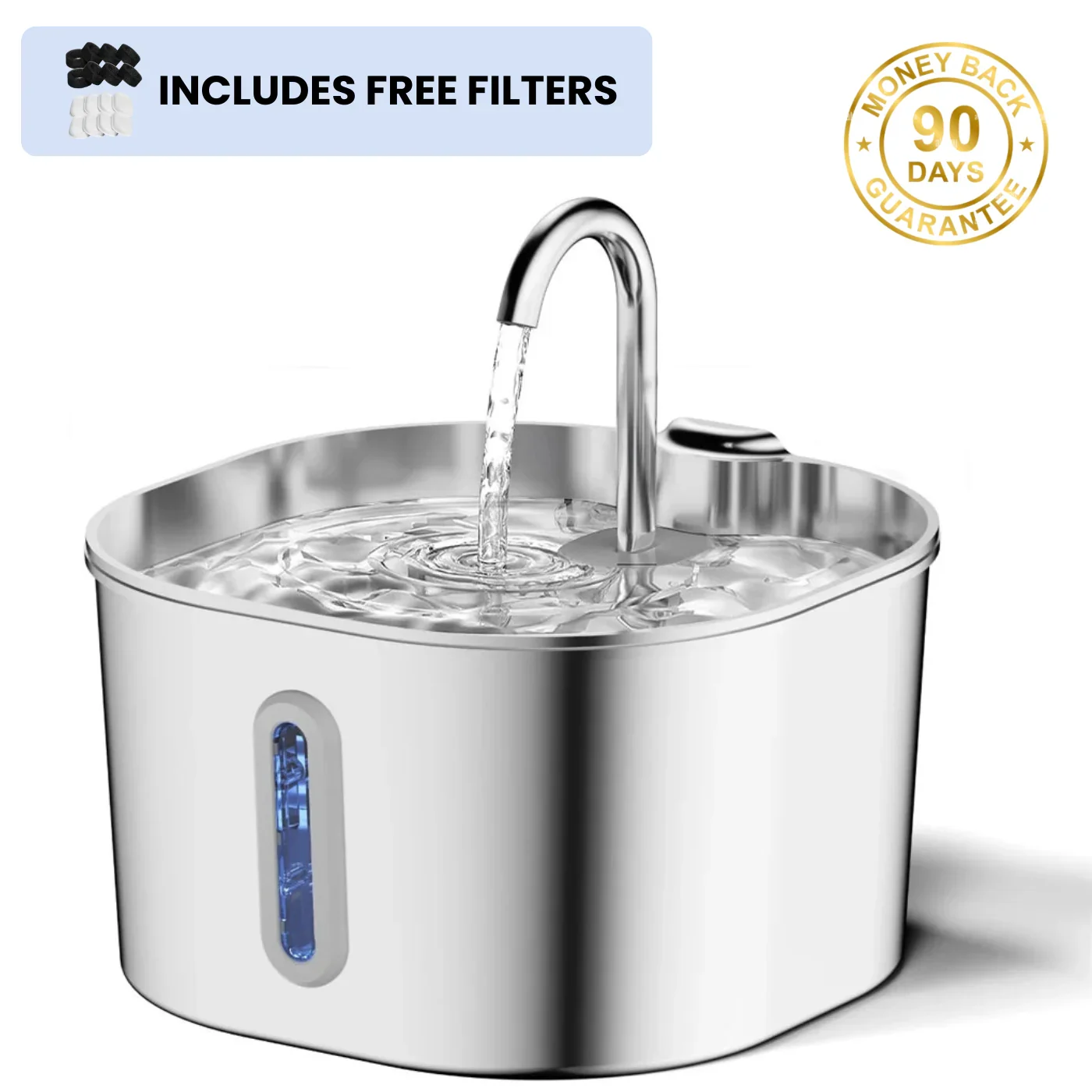
She pulled up photos of her own home setup. Three cats, all drinking from a fountain that looked completely different from anything I'd seen. Solid stainless steel. No plastic anywhere—not even in the pump.
"Surgical-grade stainless steel is non-porous. Bacteria can't colonize it. Truly cleanable. No chemical leaching. Cats recognize it as safe."
"Which brand?" I asked, already pulling out my phone.
"Purrify. It's the only one I've found with zero plastic components. My 18-year-old has been using it for seven years. Still perfect kidney values."
That night, I did something that confirmed everything Dr. Patel had said. I took apart all three plastic fountains gathering dust in my closet.
The horror inside made me physically ill.
Pink slime coated the pumps. Black mold grew in crevices I didn't know existed. The smell—God, the smell. How had I not noticed?
But Max had noticed. Every single time.
I ordered the Purrify at 1 AM, paying extra for overnight shipping. While waiting, I researched obsessively.
Forum post after forum post echoed my experience:
"Three plastic fountains, cat still dehydrated. Switched to Purrify steel—drinks constantly now."
"My vet said plastic fountains cause more kidney disease than plain bowls. Bacteria plus dehydration equals organ failure."
"Wasted $300 on plastic fountains. Cat's chin infection required antibiotics. Steel fountain fixed everything."
When the Purrify arrived, I understood immediately why it was different. The weight alone—solid steel versus hollow plastic. No seams for bacteria to hide. No porous surfaces. The water chamber was one smooth, cleanable piece.
I set it up where Max's plastic fountain had been, then stood back to watch.
Max approached cautiously. Three failed fountains had taught him to be suspicious. He sniffed extensively, circling the entire fountain.
Then he did something that made me cry.
He settled in and drank. Not desperate, quick laps. Relaxed, sustained drinking. Like a cat who'd found an oasis after crossing a desert.
"No bacteria," I whispered. "Finally, water you can trust."
The sound continued for almost three minutes. Max drinking like I'd never seen him drink.
Over the following days, it became our new soundtrack. Max visiting his fountain five, six, seven times daily. Morning drinks. Afternoon hydration sessions. Evening water breaks.
His transformation was remarkable. Within a week, his coat looked different—shinier, softer. His eyes brightened. He started playing with toys he'd ignored for months.
But the real change was his energy. The lethargy I'd attributed to age vanished. He raced up his cat tree. Demanded play sessions. Acted like a cat half his age.
The chin acne I hadn't even connected to the fountain began clearing without medication. Turns out those "cute" bumps were bacterial infections from contaminated water droplets.
At his one-month recheck, Dr. Patel ran his bloodwork twice.
"This is highly unusual," she said, studying the results. "His kidney values have improved. Not just stabilized—actually improved."
"Just from changing fountains?"
"From finally drinking adequate water. Look at his hydration markers. This is what we want to see."
She pulled up his previous tests for comparison. The difference was undeniable.
"Max was dying of thirst surrounded by water," she explained. "The plastic fountains were worse than no fountain—they gave you false confidence while repelling him with bacteria."
Six months later, Max's kidney disease hasn't progressed. His latest bloodwork shows the kidneys of a much younger cat. He drinks throughout the day, every day.
I kept one plastic fountain as a reminder. Within a week of sitting dry, visible mold appeared in the scratches and crevices. Green fuzz, black spots, pink slime.
That's what was growing when it was "clean" and running. That's what Max's 10,000-year-old instincts detected. That's what nearly killed him.
I think about the marketing that fooled me. "Antimicrobial." "BPA-free." "Pet-safe." All meaningless when the material itself is the problem.
Plastic is porous. Bacteria loves porous. Cats detect bacteria at levels we can't imagine. It's that simple.
Stainless steel isn't about being fancy. It's about being the only material that doesn't harbor death.
Every day I see Max drinking—really drinking—I think about all the cats slowly dying of thirst because their well-meaning owners bought the wrong fountain.
The same fountain I bought. Three times.
Here's where I got Max's real fountain—they're having a sale right now. If you have a plastic fountain, please, throw it out tonight. Your cat's kidneys are counting on you to get this right.
Don't let marketing fool you like it fooled me. "BPA-free" doesn't mean bacteria-free. And bacteria-free is the only thing that matters.
Your cat would rather die of thirst than drink contaminated water. Make sure they never have to make that choice.
Learn more
Jan 2026View →
View details
FACEBOOK
Read If You Own A Cat Water Fountain 👆
The moment my vet saw my cat's NEW fountain, she said THAT'S why his kidneys were FAILING.
I live in Portland with Max, my 10-year-old tabby, and I'd spent the last two years trying to solve his hydration problem.
It started innocently enough. During a routine checkup, my previous vet mentioned Max seemed slightly dehydrated. "Maybe try a water fountain," she suggested. "Cats prefer moving water."
Simple enough. I went to PetSmart that afternoon and bought a cute flower-shaped fountain. Plastic, but BPA-free. Had great reviews. Max would love it.
Except he didn't.
He'd approach, sniff, and walk away. Sometimes he'd take a desperate lap or two, but mostly he avoided it entirely.
"He's just getting used to it," I told myself. Months passed. Max drank less and less.
So I upgraded. Spent $60 on a fountain with LED lights and three water flow settings. Surely the variety would entice him.
Same result. Approach. Sniff. Retreat.
By the third fountain—an $85 model with "antimicrobial plastic" and a four-stage filter—I was desperate. This one had hundreds of five-star reviews. Pet bloggers raved about it. It HAD to work.
For a week, it seemed like it might. Max drank a bit more. Not much, but enough to give me hope.
Then came the diagnosis that shattered everything.
"Early stage kidney disease," Dr. Patel said gently, reviewing Max's bloodwork. "His values are concerning for a 10-year-old."
"But he has a fountain," I said, my voice breaking. "I've tried three different ones. He just won't drink enough."
"Show me which fountain he has now," she said.
I pulled up the product page on my phone, eager to show her the premium model I'd researched so carefully. The antimicrobial technology. The advanced filtration. The flowing water design.
Her expression darkened immediately. "Is that plastic?"
"BPA-free antimicrobial plastic," I corrected. "It's specifically designed to prevent bacteria."
Dr. Patel turned her computer screen toward me. "This is what 'antimicrobial' plastic looks like after one week of use."
The image made my stomach turn. A fountain identical to mine, but the inside was coated in pink and black slime. Biofilm covered every surface like a horror movie.
"But mine doesn't look like that," I protested weakly.
"Not to your eyes. But let me show you something." She pulled out a UV flashlight from her drawer. "Bring in your fountain tomorrow. We'll look at it under ultraviolet."
That night, I cleaned Max's fountain thoroughly, wanting to prove her wrong. Scrubbed every part. Fresh filters. Pristine.
The next day's revelation destroyed me.
Under the UV light, my "clean" fountain glowed like a crime scene. Bacteria colonies invisible to the naked eye covered every plastic surface. The crevices harbored growth that no amount of cleaning could reach.
"Plastic is porous," Dr. Patel explained. "Even BPA-free, even antimicrobial. Bacteria colonizes the microscopic scratches within hours. You can't see it, smell it, or clean it away. But Max can detect it at a molecular level."
"So every time he approaches the fountain..."
"His instincts scream 'poison.' He's genetically programmed to avoid contaminated water. In the wild, this kept cats alive. In your home, it's killing him through dehydration."
She showed me more photos. Cats with severe chin acne from plastic fountains. Kidney failure timelines correlating with fountain purchases. Statistics that made me feel like the worst cat parent alive.
"I was trying to help him," I said, tears flowing. "I bought the best fountains I could find."
"Marketing doesn't equal science," she said gently. "Let me show you what actually works."
She pulled up photos of her own home setup. Three cats, all drinking from a fountain that looked completely different from anything I'd seen. Solid stainless steel. No plastic anywhere—not even in the pump.
"Surgical-grade stainless steel is non-porous. Bacteria can't colonize it. Truly cleanable. No chemical leaching. Cats recognize it as safe."
"Which brand?" I asked, already pulling out my phone.
"Purrify. It's the only one I've found with zero plastic components. My 18-year-old has been using it for seven years. Still perfect kidney values."
That night, I did something that confirmed everything Dr. Patel had said. I took apart all three plastic fountains gathering dust in my closet.
The horror inside made me physically ill.
Pink slime coated the pumps. Black mold grew in crevices I didn't know existed. The smell—God, the smell. How had I not noticed?
But Max had noticed. Every single time.
I ordered the Purrify at 1 AM, paying extra for overnight shipping. While waiting, I researched obsessively.
Forum post after forum post echoed my experience:
"Three plastic fountains, cat still dehydrated. Switched to Purrify steel—drinks constantly now."
"My vet said plastic fountains cause more kidney disease than plain bowls. Bacteria plus dehydration equals organ failure."
"Wasted $300 on plastic fountains. Cat's chin infection required antibiotics. Steel fountain fixed everything."
When the Purrify arrived, I understood immediately why it was different. The weight alone—solid steel versus hollow plastic. No seams for bacteria to hide. No porous surfaces. The water chamber was one smooth, cleanable piece.
I set it up where Max's plastic fountain had been, then stood back to watch.
Max approached cautiously. Three failed fountains had taught him to be suspicious. He sniffed extensively, circling the entire fountain.
Then he did something that made me cry.
He settled in and drank. Not desperate, quick laps. Relaxed, sustained drinking. Like a cat who'd found an oasis after crossing a desert.
"No bacteria," I whispered. "Finally, water you can trust."
The sound continued for almost three minutes. Max drinking like I'd never seen him drink.
Over the following days, it became our new soundtrack. Max visiting his fountain five, six, seven times daily. Morning drinks. Afternoon hydration sessions. Evening water breaks.
His transformation was remarkable. Within a week, his coat looked different—shinier, softer. His eyes brightened. He started playing with toys he'd ignored for months.
But the real change was his energy. The lethargy I'd attributed to age vanished. He raced up his cat tree. Demanded play sessions. Acted like a cat half his age.
The chin acne I hadn't even connected to the fountain began clearing without medication. Turns out those "cute" bumps were bacterial infections from contaminated water droplets.
At his one-month recheck, Dr. Patel ran his bloodwork twice.
"This is highly unusual," she said, studying the results. "His kidney values have improved. Not just stabilized—actually improved."
"Just from changing fountains?"
"From finally drinking adequate water. Look at his hydration markers. This is what we want to see."
She pulled up his previous tests for comparison. The difference was undeniable.
"Max was dying of thirst surrounded by water," she explained. "The plastic fountains were worse than no fountain—they gave you false confidence while repelling him with bacteria."
Six months later, Max's kidney disease hasn't progressed. His latest bloodwork shows the kidneys of a much younger cat. He drinks throughout the day, every day.
I kept one plastic fountain as a reminder. Within a week of sitting dry, visible mold appeared in the scratches and crevices. Green fuzz, black spots, pink slime.
That's what was growing when it was "clean" and running. That's what Max's 10,000-year-old instincts detected. That's what nearly killed him.
I think about the marketing that fooled me. "Antimicrobial." "BPA-free." "Pet-safe." All meaningless when the material itself is the problem.
Plastic is porous. Bacteria loves porous. Cats detect bacteria at levels we can't imagine. It's that simple.
Stainless steel isn't about being fancy. It's about being the only material that doesn't harbor death.
Every day I see Max drinking—really drinking—I think about all the cats slowly dying of thirst because their well-meaning owners bought the wrong fountain.
The same fountain I bought. Three times.
Here's where I got Max's real fountain—they're having a sale right now. If you have a plastic fountain, please, throw it out tonight. Your cat's kidneys are counting on you to get this right.
Don't let marketing fool you like it fooled me. "BPA-free" doesn't mean bacteria-free. And bacteria-free is the only thing that matters.
Your cat would rather die of thirst than drink contaminated water. Make sure they never have to make that choice.
Learn more
Jan 2026View →
View details
FACEBOOK
Every Cat Owner Should Read This 👆
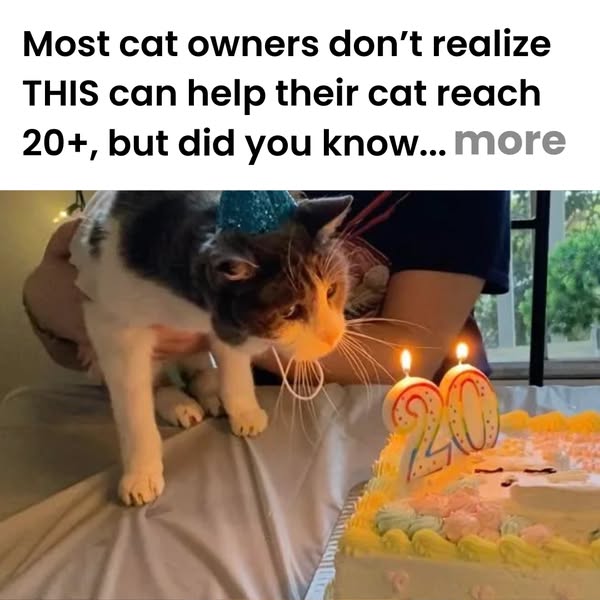
Researchers Reveal: Any Cat Can Live to 20+ If You Follow THESE Tips
When Dr. Sarah Mitchell started her study on feline longevity, she had one question: Why do some cats live twice as long as others?
She expected to find rare genetic mutations. Special bloodlines. Something in their DNA that explained the difference.
But after three years of research studying cats that lived significantly longer than average, she discovered something completely different.
"It wasn't genetics," Dr. Mitchell told us during our interview at her clinic in Seattle. "These weren't purebred cats with perfect pedigrees. Most of them were shelter cats. Strays. Regular domestic shorthairs."
"The cats that lived the longest had completely ordinary genetics. But their owners were doing three things differently."
And any cat owner can replicate these three things starting today.
Dr. Mitchell's team spent three years tracking down verified cases of cats living well into their late teens and early twenties.
They interviewed owners. Reviewed decades of veterinary records. Analyzed diets, exercise patterns, living conditions—everything they could think of.
"We wanted to know what separated a cat that lives to 12 from a cat that lives to 20," Dr. Mitchell said.
And three patterns emerged.
The first one surprised her the most.
"The number one predictor of longevity wasn't diet. It wasn't exercise. It wasn't even genetics," Dr. Mitchell said. "It was hydration."
Every single cat in the study that lived past 18 drank significantly more water than average cats.
"We're talking 60% more water on average," she said. "That's massive."
She explained that chronic dehydration is a silent killer in cats. Most cat owners have no idea their cat isn't drinking enough until it's too late.
"Cats evolved in the desert. They have a naturally low thirst drive. They're designed to get most of their moisture from prey," Dr. Mitchell said. "By the time a domestic cat feels thirsty, they're already clinically dehydrated."
And that dehydration compounds over years.
"Every day your cat spends mildly dehydrated is another day of stress on their kidneys," she explained. "Do that for 10 years and you have chronic kidney disease. Do it for 12 years and kidney failure becomes almost inevitable."
The cats in her study avoided this completely.
But here's what Dr. Mitchell found interesting.
These cats weren't just drinking from bowls. In fact, most of them refused standard water bowls entirely.
"Almost every owner I interviewed said their cat preferred running water," Dr. Mitchell said. "Faucets. Showers. Garden hoses. Anywhere the water was moving."
"And the cats that lived the longest? They all had consistent access to flowing water. Every single day. For years."
That's when Dr. Mitchell started looking into cat water fountains.
"I assumed these owners had bought fountains and that was it," she said. "But when I dug deeper, something didn't add up."
Most of the owners said their cats had stopped using their fountains after a few months.
They'd buy a fountain. The cat would love it initially. Drink from it constantly. Then three or four months later, the cat would completely ignore it.
"I started asking owners to bring in their old fountains. The ones their cats had stopped using," Dr. Mitchell said.
She put them under a UV light—the same kind used to detect bacteria in hospitals.
"Every single plastic fountain lit up like a crime scene," she said. "Glowing bacterial colonies everywhere."
It was biofilm. Bacteria living in microscopic scratches in the plastic.
"These owners were cleaning their fountains religiously. Some of them every single day," Dr. Mitchell said. "But they didn't realize that every time they cleaned it, they were making the problem worse."
She explained that plastic develops microscopic scratches every time you clean it. From sponges. From brushes. Even from wiping with a cloth.
Bacteria colonizes those scratches and forms biofilm. And once it's embedded, you can't scrub it out.
"So every time you clean a plastic fountain, you're removing the visible grime. But you're also creating new hiding spots for bacteria," Dr. Mitchell said.
That's why cats stop drinking from plastic fountains after a few months.
"Your cat can smell what you can't see. Their instincts tell them the water isn't safe. And they're right."
But here's what the owners of cats who lived past 18 did differently.
They had all switched to 304 surgical-grade stainless steel fountains.
"Not regular stainless steel," Dr. Mitchell clarified. "It has to be 304-grade specifically."
She explained that 304 stainless steel has a self-healing chromium oxide layer on its surface.
"When the surface gets scratched—from cleaning, from your cat's tongue, from anything—the layer reforms on its own within hours," she said.
"Bacteria can't colonize the scratches because the scratches don't stay open. The surface literally heals itself."
It's the same material used in operating rooms and hospitals for exactly this reason.
"Once the owners in my study switched to 304 stainless steel, their cats drank consistently for years," Dr. Mitchell said. "We're talking 10, 15, even 18 years of daily use. The cats never stopped trusting the water."
And that consistent hydration over decades kept their kidneys healthy well into old age.
"Kidney disease is the number one cause of death in senior cats," Dr. Mitchell said. "It's almost always preventable. But most owners don't realize their cat isn't drinking enough until the bloodwork comes back bad. By then, the damage is permanent."
That was the first pattern.
The second pattern was diet—but not in the way most people think.
"Everyone asks me about raw diets or grain-free or organic," Dr. Mitchell said. "But that's not what mattered."
What mattered was moisture content.
"The cats that lived the longest ate predominantly wet food. At least 70-80% of their diet," she said.
She explained that dry kibble causes chronic dehydration in cats.
"Kibble is only about 10% moisture. Wet food is 70-80% moisture," Dr. Mitchell said. "When you feed a cat primarily dry food, you're asking them to make up that hydration deficit by drinking. And cats just don't drink enough on their own."
The cats in her study got most of their water from their food—and then supplemented with a fountain they actually trusted.
"That combination is what kept them properly hydrated for 18, 19, even 20 years," she said.
The third pattern was stress levels.
"The cats that lived the longest had very stable, low-stress environments," Dr. Mitchell said. "No major disruptions. Consistent routines. Safe indoor lives."
She explained that chronic stress accelerates aging in cats just like it does in humans.
"Stress hormones damage organs over time. Especially the kidneys and heart," she said.
The owners in her study had created calm, predictable environments for their cats. No frequent moves. No constant introduction of new pets. Just stability.
"These three things together—proper hydration, high-moisture diet, and low stress—that's what allowed these cats to live well into their late teens and early twenties," Dr. Mitchell said.
When we asked her what fountain she recommends, she didn't hesitate.
"Purrify. It's the only one that's 100% 304 stainless steel. No plastic parts. No hidden tubing where bacteria builds up."
She said she's been recommending it to clients for two years now.
"I've seen cats that ignored their plastic fountains for months start drinking again within days of switching," Dr. Mitchell said. "Because the water is actually clean. And cats can tell the difference."
For Dr. Mitchell, the lesson is clear.
"Any cat can live to 20 with the right care. The cats in my study weren't genetic outliers. They just had owners who kept them properly hydrated."
"Most cats die of kidney disease at 12, 13, 14 because they spent their whole lives mildly dehydrated. Their owners had no idea."
"But it doesn't have to be that way."
We asked if she thought more cats could reach their late teens and early twenties with these three changes.
"Absolutely," Dr. Mitchell said. "The data is clear. Proper hydration alone could add 5-7 years to the average cat's life. Add in a high-moisture diet and low stress? You're looking at cats regularly living into their late teens and early twenties."
"The cats in my study proved it's possible. Now we just need more owners to actually do it."
Purrify comes with a 90-day money-back guarantee. If your cat doesn't drink from it, you pay nothing.
But if they do—you'll finally know they're getting the hydration they need to live a long, healthy life.
Click below to get Purrify.
P.S. — "The average cat lives to 12-15 years," Dr. Mitchell said. "But the cats in my study lived to 18, 19, even 20. The only difference was hydration. Don't wait until the kidney damage is done. Start now."
Learn more
Jan 2026View →
View details
FACEBOOK
Read If You Own A Cat Water Fountain👆
The moment my vet saw my cat's NEW fountain, she said THAT'S why his kidneys were FAILING.
I live in Portland with Max, my 10-year-old tabby, and I'd spent the last two years trying to solve his hydration problem.
It started innocently enough. During a routine checkup, my previous vet mentioned Max seemed slightly dehydrated. "Maybe try a water fountain," she suggested. "Cats prefer moving water."
Simple enough. I went to PetSmart that afternoon and bought a cute flower-shaped fountain. Plastic, but BPA-free. Had great reviews. Max would love it.
Except he didn't.
He'd approach, sniff, and walk away. Sometimes he'd take a desperate lap or two, but mostly he avoided it entirely.
"He's just getting used to it," I told myself. Months passed. Max drank less and less.
So I upgraded. Spent $60 on a fountain with LED lights and three water flow settings. Surely the variety would entice him.
Same result. Approach. Sniff. Retreat.
By the third fountain—an $85 model with "antimicrobial plastic" and a four-stage filter—I was desperate. This one had hundreds of five-star reviews. Pet bloggers raved about it. It HAD to work.
For a week, it seemed like it might. Max drank a bit more. Not much, but enough to give me hope.
Then came the diagnosis that shattered everything.
"Early stage kidney disease," Dr. Patel said gently, reviewing Max's bloodwork. "His values are concerning for a 10-year-old."
"But he has a fountain," I said, my voice breaking. "I've tried three different ones. He just won't drink enough."
"Show me which fountain he has now," she said.
I pulled up the product page on my phone, eager to show her the premium model I'd researched so carefully. The antimicrobial technology. The advanced filtration. The flowing water design.
Her expression darkened immediately. "Is that plastic?"
"BPA-free antimicrobial plastic," I corrected. "It's specifically designed to prevent bacteria."
Dr. Patel turned her computer screen toward me. "This is what 'antimicrobial' plastic looks like after one week of use."
The image made my stomach turn. A fountain identical to mine, but the inside was coated in pink and black slime. Biofilm covered every surface like a horror movie.
"But mine doesn't look like that," I protested weakly.
"Not to your eyes. But let me show you something." She pulled out a UV flashlight from her drawer. "Bring in your fountain tomorrow. We'll look at it under ultraviolet."
That night, I cleaned Max's fountain thoroughly, wanting to prove her wrong. Scrubbed every part. Fresh filters. Pristine.
The next day's revelation destroyed me.
Under the UV light, my "clean" fountain glowed like a crime scene. Bacteria colonies invisible to the naked eye covered every plastic surface. The crevices harbored growth that no amount of cleaning could reach.
"Plastic is porous," Dr. Patel explained. "Even BPA-free, even antimicrobial. Bacteria colonizes the microscopic scratches within hours. You can't see it, smell it, or clean it away. But Max can detect it at a molecular level."
"So every time he approaches the fountain..."
"His instincts scream 'poison.' He's genetically programmed to avoid contaminated water. In the wild, this kept cats alive. In your home, it's killing him through dehydration."
She showed me more photos. Cats with severe chin acne from plastic fountains. Kidney failure timelines correlating with fountain purchases. Statistics that made me feel like the worst cat parent alive.
"I was trying to help him," I said, tears flowing. "I bought the best fountains I could find."
"Marketing doesn't equal science," she said gently. "Let me show you what actually works."
She pulled up photos of her own home setup. Three cats, all drinking from a fountain that looked completely different from anything I'd seen. Solid stainless steel. No plastic anywhere—not even in the pump.
"Surgical-grade stainless steel is non-porous. Bacteria can't colonize it. Truly cleanable. No chemical leaching. Cats recognize it as safe."
"Which brand?" I asked, already pulling out my phone.
"Purrify. It's the only one I've found with zero plastic components. My 18-year-old has been using it for seven years. Still perfect kidney values."
That night, I did something that confirmed everything Dr. Patel had said. I took apart all three plastic fountains gathering dust in my closet.
The horror inside made me physically ill.
Pink slime coated the pumps. Black mold grew in crevices I didn't know existed. The smell—God, the smell. How had I not noticed?
But Max had noticed. Every single time.
I ordered the Purrify at 1 AM, paying extra for overnight shipping. While waiting, I researched obsessively.
Forum post after forum post echoed my experience:
"Three plastic fountains, cat still dehydrated. Switched to Purrify steel—drinks constantly now."
"My vet said plastic fountains cause more kidney disease than plain bowls. Bacteria plus dehydration equals organ failure."
"Wasted $300 on plastic fountains. Cat's chin infection required antibiotics. Steel fountain fixed everything."
When the Purrify arrived, I understood immediately why it was different. The weight alone—solid steel versus hollow plastic. No seams for bacteria to hide. No porous surfaces. The water chamber was one smooth, cleanable piece.
I set it up where Max's plastic fountain had been, then stood back to watch.
Max approached cautiously. Three failed fountains had taught him to be suspicious. He sniffed extensively, circling the entire fountain.
Then he did something that made me cry.
He settled in and drank. Not desperate, quick laps. Relaxed, sustained drinking. Like a cat who'd found an oasis after crossing a desert.
"No bacteria," I whispered. "Finally, water you can trust."
The sound continued for almost three minutes. Max drinking like I'd never seen him drink.
Over the following days, it became our new soundtrack. Max visiting his fountain five, six, seven times daily. Morning drinks. Afternoon hydration sessions. Evening water breaks.
His transformation was remarkable. Within a week, his coat looked different—shinier, softer. His eyes brightened. He started playing with toys he'd ignored for months.
But the real change was his energy. The lethargy I'd attributed to age vanished. He raced up his cat tree. Demanded play sessions. Acted like a cat half his age.
The chin acne I hadn't even connected to the fountain began clearing without medication. Turns out those "cute" bumps were bacterial infections from contaminated water droplets.
At his one-month recheck, Dr. Patel ran his bloodwork twice.
"This is highly unusual," she said, studying the results. "His kidney values have improved. Not just stabilized—actually improved."
"Just from changing fountains?"
"From finally drinking adequate water. Look at his hydration markers. This is what we want to see."
She pulled up his previous tests for comparison. The difference was undeniable.
"Max was dying of thirst surrounded by water," she explained. "The plastic fountains were worse than no fountain—they gave you false confidence while repelling him with bacteria."
Six months later, Max's kidney disease hasn't progressed. His latest bloodwork shows the kidneys of a much younger cat. He drinks throughout the day, every day.
I kept one plastic fountain as a reminder. Within a week of sitting dry, visible mold appeared in the scratches and crevices. Green fuzz, black spots, pink slime.
That's what was growing when it was "clean" and running. That's what Max's 10,000-year-old instincts detected. That's what nearly killed him.
I think about the marketing that fooled me. "Antimicrobial." "BPA-free." "Pet-safe." All meaningless when the material itself is the problem.
Plastic is porous. Bacteria loves porous. Cats detect bacteria at levels we can't imagine. It's that simple.
Stainless steel isn't about being fancy. It's about being the only material that doesn't harbor death.
Every day I see Max drinking—really drinking—I think about all the cats slowly dying of thirst because their well-meaning owners bought the wrong fountain.
The same fountain I bought. Three times.
Here's where I got Max's real fountain—they're having a sale right now. If you have a plastic fountain, please, throw it out tonight. Your cat's kidneys are counting on you to get this right.
Don't let marketing fool you like it fooled me. "BPA-free" doesn't mean bacteria-free. And bacteria-free is the only thing that matters.
Your cat would rather die of thirst than drink contaminated water. Make sure they never have to make that choice.
Learn more
Sep 2025View →
View details
FACEBOOK
Read If Your Cat Ignores Their Fountain👆
Please STOP cleaning your cat's fountain. I know that sounds crazy, but every time you do, you're missing what's actually making them ignore the water.
Let me explain.
I've been in your shoes.
I've always tried to make sure my senior kitty Momo (16m) drinks as much as possible.
Because I know senior cats can be prone to kidney problems and stuff like that.
And once I learned that cats prefer moving water over still water, I did what most people do and got him one of those cat water fountains off Amazon.
He loved it. Drank from it all the time.
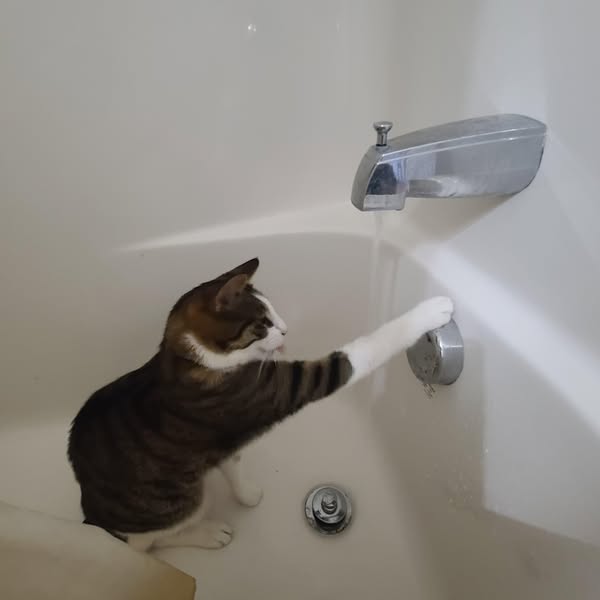
He would want water from the bathtub faucet occasionally, so I would turn the faucet on for him as a treat. It was kinda rare.
But one year later, he just stopped drinking from his fountain.
It's like he decided one day he didn't like it.
I was changing the water daily.
And YES I cleaned it by hand with hot water. Weekly. Would even disassemble and clean the pump too.
After he stopped using his fountain I could only get him to drink water from the tub.
He would go sit in the tub for ages and wait for me to come in and turn the water on. And I feel so bad that I can't help but turn it on for him, because I want to make sure he's hydrated!
It was driving me crazy.
I tried putting a shallow saucer where his fountain used to be. He'd sip from it occasionally. But he still always wanted the tub.
I thought maybe he was just getting old and picky.
But I still couldn't shake the worry.
A few sips from the faucet a couple times a day didn't feel like enough. Not for a 16 year old cat. Not when I know what dehydration leads to.
Once this started my anxiety wouldn't go away.
Every time he walked past his fountain without drinking, I felt it.
Every time I found him sitting in the tub waiting, I worried.
Was he getting enough water? Was I failing him?
The breaking point came at his annual checkup.
The vet ran his bloodwork.
"His kidney values are elevated," she said. "He's chronically dehydrated."
I was devastated. But a part of me saw this coming.
"If we don't get his hydration up, we could be looking at chronic kidney disease down the road. Or worse, a urinary blockage."
I felt like the worst cat mom in the world.
I had multiple water bowls. I had a fountain. I cleaned it constantly. I did everything I was supposed to do.
And he still wouldn't drink.
"I don't know what else to do," I told her. "He won't touch his fountain anymore. I've tried everything."
"Where'd you get the fountain from?" she asked.
"Amazon. Just got the plastic flower one cause I saw it first."
"Ah." She nodded like she already knew exactly what the problem was.
"Bring it in tomorrow. I want to show you something."
The next day, I brought it in.
She took me to the back and put the bowl under a UV light—the same kind they use to detect bacteria and contamination.
My jaw dropped. It lit up like a crime scene.
Glowing streaks and spots everywhere. Places I thought were perfectly clean.
"You see these patterns?" she said. "That's biofilm. Bacteria colonies living in the scratches."
"What scratches? I clean it every week. I even clean the pump."
"That's the problem."
She explained that every time I cleaned the fountain—every scrub, every wipe with hot water—I was creating microscopic tears in the plastic surface.
Bacteria moves into those scratches. Biofilm forms. And no matter how hard you scrub, you can't reach it.
"So when I clean it, I'm making it worse?"
"You're doing the right thing by cleaning out the mold and mildew," she said. "That part isn't optional. It's just that every time you do, you're creating new scratches. New places for bacteria to hide. The fountain will never be as clean as it was on day one."
She said this is why cats like Momo start out loving their fountain—then slowly lose interest over time.
"Your cat can smell what you can't see. His instincts are telling him the water isn't safe. That's why he'll only drink from the faucet. Fresh water, no buildup, no history."
"So what do I do? I can't just keep turning on the faucet. That's clearly not working."
"If you want him to actually drink from a fountain long-term—not just use it for a few months before he starts ignoring it again—you need a fountain made from surgical-grade 304 stainless steel."
"I thought stainless steel was just about preventing mold."
"That's part of it. But here's what most people don't know."
She explained that 304 stainless steel has a self-healing chromium oxide layer. When the surface gets scratched—from cleaning, from your cat, from anything—the layer reforms on its own within hours.
"Bacteria can't settle into the scratches because the scratches don't stay open. The surface heals itself. So when you clean it, it actually gets clean. And it stays clean. Month after month. Year after year."
"So he won't stop drinking from it after a few months like the last one?"
"Not if the water stays clean. And with 304 stainless steel, it will."
She told me about a fountain called Purrify.
"It's 304 stainless steel. No plastic parts. No hidden tubing where slime builds up. It's the only one I recommend to clients dealing with this."
I ordered it that night.
Honestly? I didn't expect much. I'd already tried everything.
When it arrived, I set it up next to his old fountain.
For the first two days, he ignored it. Just like I expected.
Then on day three, I heard something from the kitchen.
Lapping.
I walked in and there he was. Drinking. Actually drinking.
Not sniffing and walking away. Not waiting for the faucet.
Drinking.
Within a week, I was hearing it multiple times a day. Morning. Afternoon. Middle of the night.
At his follow-up appointment, the vet ran his bloodwork again.
"His kidney values are back in normal range," she said. "Whatever you're doing, keep doing it."
It's been four months now.
He still asks for the faucet sometimes. And there are days where I don't see him drink from the fountain at all. Cats are just cats I guess lol.
But I hear him drinking from it. Regularly. Multiple times a day.
And that's the thing—I don't have to wonder anymore.
I don't have to worry if he's getting enough. I don't have to feel that pit in my stomach every time he walks past his water.
I have proof he's drinking. I can hear it.
That peace of mind? After everything I went through? I can't put a price on it.
If your cat stopped trusting their fountain, they were right not to.
Their instincts were telling them the water wasn't safe. And no amount of scrubbing was going to fix it—because the scrubbing was the problem.
You don't need to clean more.
You need a fountain that doesn't betray your cat's trust every time you try to take care of it.
Purrify comes with a 90-day money-back guarantee. If your cat doesn't drink from it, you pay nothing.
But if they do—you'll finally stop worrying every time they walk past their water bowl.
Click below to get Purrify.
[LINK]
P.S. — If you have a senior cat, this matters even more. Elevated kidney values don't reverse themselves. Every day your cat isn't drinking enough is another day of damage. The faucet isn't a long-term solution. This is.
---
Learn More
Jan 2026View →
194 more ad creatives
Ad spend, audience targeting & creative performance
Get winning data you can't find anywhere else, save 95% of your time, and replace $1500+/m in tools. The platform built to make you rich fast for sure.
Over $100k/day adspend
"The ability to see exactly what creatives are scaling for our competitors is a cheat code. We've improved our hit rate on new ad launches by over 300%."
According to BrandSearch data, trypurrify.com's product catalog includes 7 items. Analyze their winning products, trending items, pricing strategies, product descriptions, and top sellers. See which products drive the most revenue and learn from their product selection strategy to find your own winning products for dropshipping or private label.
According to BrandSearch analytics, trypurrify.com receives approximately 32,318 monthly visitors. BrandSearch provides detailed traffic analytics including organic vs paid traffic sources, geographic distribution, bounce rates, session duration, and estimated monthly revenue ranges. Use these performance metrics to benchmark your own e-commerce store and set realistic growth targets.
Yes! BrandSearch's ad intelligence reveals trypurrify.com's complete Meta advertising strategy including all Facebook ads, Instagram ads, and ad creatives. Analyze their ad copy, visual hooks, call-to-actions, targeting strategies, and promotional offers. Study their winning ad creatives to inspire your own Facebook and Instagram advertising campaigns and improve your ROAS (Return on Ad Spend).
BrandSearch's technology detection identifies trypurrify.com's complete tech stack including all Shopify apps, theme, payment processors, email marketing tools, analytics platforms, and conversion optimization apps. See which apps they use for reviews, upsells, abandoned cart recovery, SEO, and social proof. Copy their winning tech stack to build a high-converting e-commerce store without trial and error.
BrandSearch provides full competitive intelligence on trypurrify.com: traffic sources (organic SEO, paid ads, social media, email), top SEO keywords driving traffic, geographic markets, customer demographics, advertising spend estimates, and growth trends. Identify gaps in their product range, find underserved niches, analyze their pricing strategy, and discover opportunities to differentiate your brand. Perfect for competitive analysis and market research.
BrandSearch helps you identify trypurrify.com's business model by analyzing their product catalog, supplier patterns, shipping locations, pricing margins, and product uniqueness. See if they're running a dropshipping operation, selling private label products, or manufacturing their own goods. Learn from their product sourcing and fulfillment strategies to optimize your own e-commerce operations.
Unlock the full strategy behind My Store
See every product, winning ad, traffic source and revenue signal behind My Store — in seconds.