Free Shipping Thresholds: What 310 Stores Actually Set
The advice says set it 15-30% above AOV. 310 brands' emails show $50, $75 or $100 almost regardless of price. Here is what that means for your store.
Rainbow sells shoes from $10. Its emails promise free shipping on orders over $75. Race Face sells $550 wheelsets, and its emails promise free shipping over $49. At Rainbow's average price, a shopper needs six or seven items before shipping is free. At Race Face's, most single items already qualify.
Neither looks like the rule every guide repeats: start from your average order value and set the threshold 15 to 30 percent above it. We wanted to know how many stores actually do that, so we read the free shipping offers in 1,147 English-language marketing emails sent by 1,002 ecommerce brands on eight sample days between 30 April and 4 November 2026, kept the 310 brands that named a usable number, and put each number next to the brand's average product price.
The short answer: thresholds are picked from a menu of three round numbers, and they barely move with what the store sells. That makes them too steep for cheap catalogues and close to meaningless for expensive ones.
$50, $75 or $100, whatever is in the cart
Free shipping is the second most common offer in brand emails, a long way behind percentage discounts. Of the 1,209,980 emails carrying an offer in Brandsearch's email index between 18 March and 31 October 2026, 135,868 (11.2%) offered free shipping, against 74.2% with a percentage off. In our sample, only 325 of the 1,002 brands put a number on it in the emails we pulled. The rest just say "free shipping", which is a choice in itself.
Among the 310 brands we kept, three values account for 38.7% of them: 100 (16.1% on its own), 75 and 50. Look only at US stores pricing in dollars and the three cover 45.7%.
Source: Brandsearch email index, marketing emails with a free shipping offer, one email per brand · Data as of November 4, 2026
The figures
| Name | Stores |
|---|---|
| $75 | 29 stores |
| $100 | 28 stores |
| $50 | 22 stores |
| $150 | 15 stores |
| $99 | 9 stores |
| $49 | 7 stores |
| $30 | 6 stores |
| $125 | 5 stores |
| Any other amount | 52 stores |
61% of all thresholds are a multiple of 25. Another 11.6% end in 9 ($49, $99, $149), the same round numbers dressed as a price tag. Only 14% land on a figure that is not a multiple of 5, like $68 or $112, which is what a calculation from a real AOV would produce most of the time.
That is not proof that no one does the maths. A brand can compute $68 and round it to $75. But if thresholds were set from each store's own order values, they would be spread across the range in proportion to how prices are spread. They are not.
Double the price, the threshold moves 30%
The clearest test is to set each threshold against what the store sells. We used the brand's average product price, in the store's own currency, so a British brand's £60 is compared with its prices in pounds.
On a log scale, the relationship between average price and threshold has a slope of 0.38. In plain terms: a store whose products cost twice as much as another's sets a threshold only about 30% higher. If thresholds followed price, the slope would be close to 1.
Here is what that looks like for 22 US brands in the sample, each threshold taken from one of its own emails.
↑ Free shipping threshold in their emails
Average product price in the catalogue →
Source: Brandsearch email index and brand profiles · Data as of November 4, 2026
The figures
| Name | Average product price in the catalogue | Free shipping threshold in their emails |
|---|---|---|
| Rainbow | $11.9 | $75 |
| Flamingo | $11.7 | $30 |
| OLLY | $14.2 | $49 |
| Lanolips | $20.5 | $40 |
| Wink | $30.1 | $75 |
| Sockwell | $30.7 | $75 |
| ILIA | $33.1 | $50 |
| Matte Collection | $43.9 | $150 |
| Brown Sugar Babe | $47.4 | $150 |
| Ursa Major | $53.7 | $40 |
| FitVille | $65 | $75 |
| Red Dress | $68.4 | $150 |
| Murad | $69.9 | $50 |
| Hommey | $73.2 | $100 |
| Venum | $76.6 | $75 |
| Reebok | $79.5 | $75 |
| Gymreapers | $85.9 | $75 |
| Midway Sports | $87.8 | $100 |
| The Normal Brand | $102.5 | $150 |
| FAO Schwarz | $112.9 | $100 |
| NuFACE | $129.9 | $75 |
| Race Face | $131.1 | $49 |
Reebok, Venum, Gymreapers, FitVille, Wink and Sockwell all sit on $75, with average prices that run from $30 to $86. Brown Sugar Babe asks $150 for a catalogue averaging $47. Murad, at $70 a product, asks $50. The line through these points is nearly flat.
Cheap catalogues ask for three items, premium ones for less than one
Divide each threshold by the store's average price and you get a rough count of how many average items it takes to qualify. The AOV rule would put most stores a little above one. Only 13.5% of the 310 land between 1 and 1.3 average items. The rest split towards two extremes, and which extreme depends almost entirely on price.
- One item or less
- 1 to 2 items
- 2 to 3 items
- More than 3 items
Source: Brandsearch email index and brand profiles, 310 brands, average product price in the store's currency · Data as of November 4, 2026
The figures
| Name | One item or less | 1 to 2 items | 2 to 3 items | More than 3 items | Total |
|---|---|---|---|---|---|
| Under 25 | 2 (5%) | 8 (20%) | 10 (25%) | 20 (50%) | 40 |
| 25 to 50 | 6 (7.2%) | 34 (41%) | 27 (33%) | 16 (19%) | 83 |
| 50 to 100 | 37 (39%) | 43 (45%) | 15 (16%) | 1 (1%) | 96 |
| 100 to 200 | 36 (59%) | 22 (36%) | 2 (3.3%) | 1 (1.6%) | 61 |
| 200 and up | 24 (80%) | 5 (17%) | 1 (3.3%) | 0 (0%) | 30 |
Below an average price of 25, half the stores (20 of 40) ask for more than three average items, and the median store asks for three. Only 2 of the 40 let one item through. Rainbow, at about six items, is the extreme, but OLLY ($14 average, $49 threshold) and Flamingo ($12 average, $30) follow the same pattern.
Between 100 and 200, 59% of stores (36 of 61) set a threshold at or below their average price. Above 200, 80% do (24 of 30). For these stores the threshold does not build a basket. It tells shoppers that shipping is free unless they buy an accessory on its own, which is a different policy with a different cost.
Thirty-four percent of the whole sample is in that "one item or less" group. Combine it with the 30% asking for more than two items, and roughly two stores in three have a threshold that cannot be doing what the guides say it does.
Stop reading about winners. Find them yourself.
Search 15M+ brands, their ads, revenue, and products — all in one place.
Try Brandsearch freeWhere the average price misleads
The yardstick here is the brand's average catalogue price, not its average order value, and the two can be far apart. Lights4fun is the clearest case in the sample. Its catalogue average is £210, pulled up by its most expensive products, so its £60 free delivery looks generous. But the email that carried that £60 was selling pumpkins at £9.99 to £59.99. For the shopper reading it, the threshold was two or three items, not a quarter of one.
So the "one item or less" share for expensive catalogues is probably too high: a store's mean price is pulled up by its most expensive products, while orders lean to the cheaper ones. The cheap end does not have this problem. A catalogue averaging $12 contains no hidden $200 item that would bring the threshold within reach, so "three items or more" at the bottom of the market is solid.
Three other limits. Only a third of the brands in our sample gave a figure, and those that state their threshold may differ from those that do not. The threshold is parsed from the email, so a number on a regional banner can be the wrong one. We checked five against the email itself (Rainbow, Reebok, Lights4fun, Race Face, Brown Sugar Babe) and all five matched. And this sample shows what brands set, not what works. Nothing here says Rainbow's $75 loses money; with $10 shoes and in-store returns, it may be exactly what keeps the business profitable.
Read your own number before Black Friday
The useful exercise takes five minutes. Divide your threshold by the price of the product most people buy first, not by your catalogue average.
Under one item: you do not have a threshold, you have free shipping with an exception for small orders. That can be the right choice for a premium brand. But stop counting it as an AOV lever, and check whether a $49 threshold on $130 products, as at Race Face, is costing you shipping on orders that would have gone through anyway.
Around 1.2 to 2 items: this is where a threshold can actually change a basket, by asking for one more thing. If you are here, the AOV advice is already working for you.
Above three items: you are in the company of most cheap catalogues, and the threshold is probably acting as a shipping fee. Before raising prices or cutting shipping costs, test a lower threshold on part of your traffic.
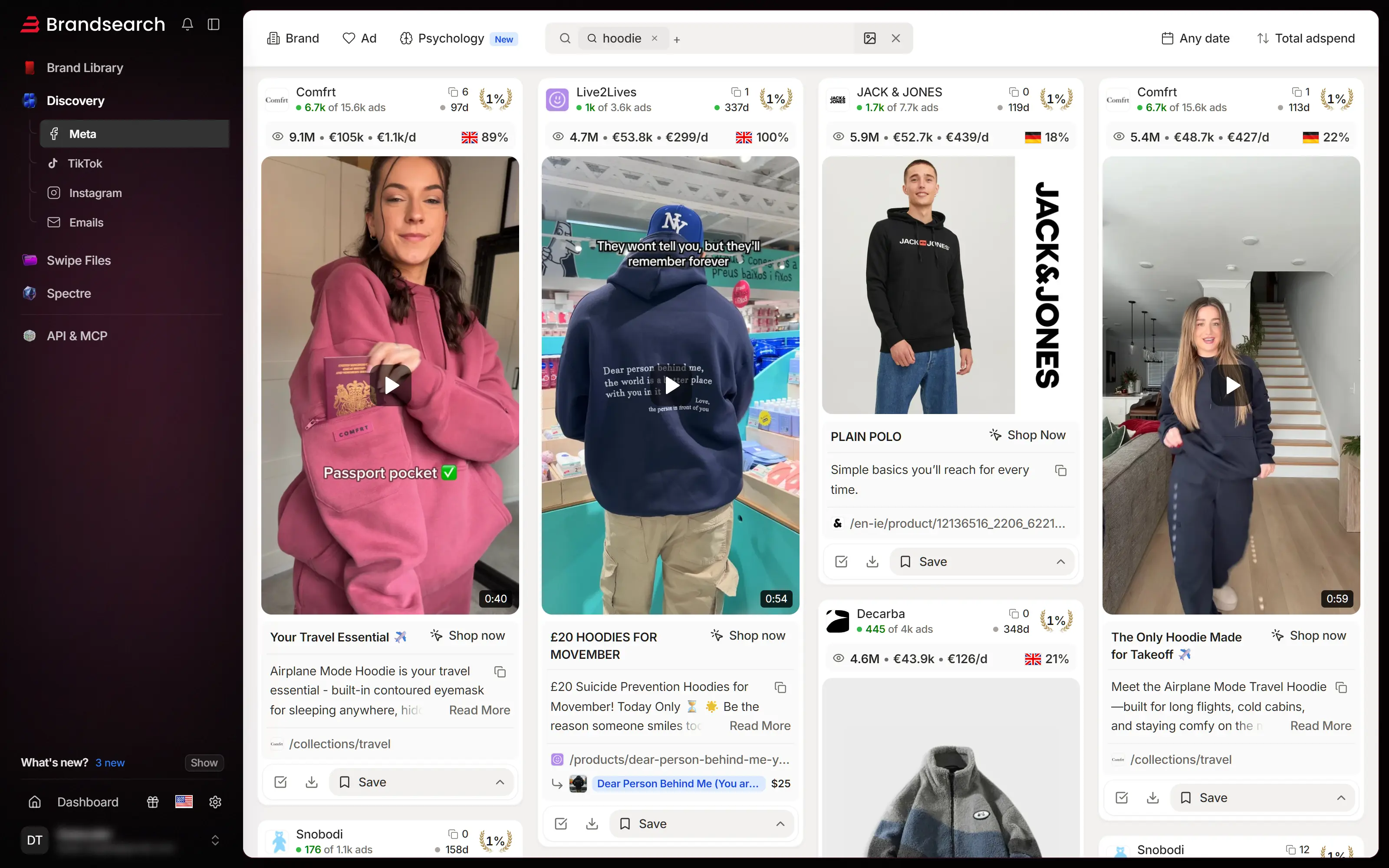
Then look at what your competitors write. If a rival lowers or drops its threshold for Black Friday, its emails will say so before its FAQ page does, and in 2026 the Black Friday ads started in September. The free shipping line in a competitor's email footer and the offer in their welcome and cart recovery flows tell you the shipping policy they are actually selling with. In Brandsearch, filter emails by brand and by the free shipping offer: each one shows the threshold it named and when it was sent, so you can see whether a rival's $75 became $50 in the last week of November. For what the rest of a competitor's programme looks like, our email marketing examples show 20 brands' sending patterns, send by send.
The guides are right that a threshold should come from your own numbers. What the inbox shows is that most stores do not do that: they pick $50, $75 or $100 and leave it there. If your threshold is one of those three, it may be the right number. Check your first-item price before you assume it is.